


The United States has stepped in to stabilize Argentina’s troubled markets with a rare financial intervention — a move that has steadied the peso but triggered fierce political controversy at home.
The US Treasury confirmed on Thursday that it would purchase $20 billion (€17.28 billion) worth of Argentine pesos and open a large swap line to bolster Buenos Aires’ dwindling dollar reserves. The move followed four days of meetings in Washington between Treasury Secretary Scott Bessent and Argentine Economy Minister Luis Caputo.
“The US Treasury is prepared, immediately, to take whatever exceptional measures are warranted to provide stability to markets,” Bessent said in a statement.
The intervention sparked an immediate rally in Argentina’s assets. The country’s dollar-denominated bonds jumped about 10%, while Buenos Aires’ stock market surged 15% after the announcement. Economy Minister Caputo thanked Bessent for his “steadfast commitment,” calling the deal “a vital step toward financial stability.”
However, the bailout has ignited sharp criticism in Washington, where opponents accused the administration of propping up a foreign economy at the expense of American interests. Democratic lawmakers and US farmers voiced anger that the Treasury was supporting Argentina, whose agricultural exports compete directly with US products — particularly soybeans sold to China.
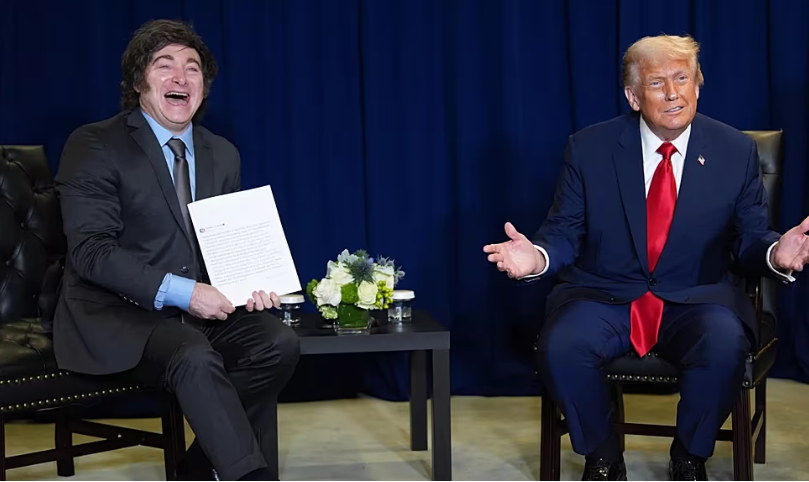
President Javier Milei, Argentina’s libertarian leader and an outspoken admirer of former US President Donald Trump, hailed the move as a symbol of “hemispheric solidarity.” In a social media post, Milei thanked Trump for his “powerful leadership,” declaring, “Together, as the closest of allies, we will make a hemisphere of economic freedom and prosperity.”
The gesture has intensified accusations that the deal was politically motivated. Critics argue that the support benefits Milei ahead of Argentina’s October 26 midterm elections, where his sweeping austerity program and faltering economy are under growing scrutiny.
In Congress, Democratic senators swiftly introduced the “No Argentina Bailout Act,” aiming to block the Treasury from using its Exchange Stabilization Fund to aid Buenos Aires. “It is inexplicable that President Trump is propping up a foreign government while he shuts down our own,” Senator Elizabeth Warren said in a statement. “Trump promised ‘America First,’ but he’s putting himself and his billionaire buddies first and sticking Americans with the bill.”
Argentina’s economy remains deeply fragile, burdened by soaring inflation, dwindling reserves, and a $41.8 billion (€35.4 billion) debt to the International Monetary Fund — the largest in the lender’s history. Milei, who took office in late 2023 pledging to slash public spending with what he called a “chainsaw plan,” has yet to deliver an economic rebound.
For now, Washington’s intervention offers him breathing space — but it may come at a steep political price on both sides of the equator.
