


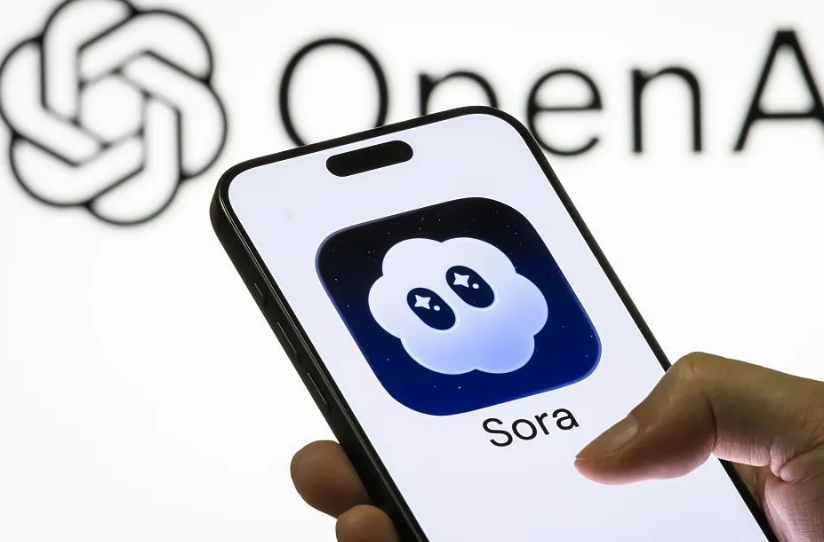
OpenAI’s latest video-generation tool, Sora, has surpassed one million downloads in less than five days, achieving the milestone faster than ChatGPT did at launch. The rapid uptake propelled Sora to the top of the Apple App Store charts in the United States, reflecting surging public interest in text-to-video technology.
The app enables users to create ten-second, realistic-looking videos using simple text prompts. Its swift popularity was announced in a post on X by Sora head Bill Peebles, who described the growth as “remarkable” given that access remains limited to invite-only users in North America.
However, the success has been overshadowed by growing backlash over copyright and ethical concerns. Critics have accused Sora of enabling misuse of copyrighted material and unauthorized depictions of deceased celebrities. Social media feeds have been inundated with videos featuring lifelike recreations of late figures such as Michael Jackson, Tupac Shakur, and Robin Williams.
The controversy intensified earlier this week when Zelda Williams, daughter of the late comedian and actor Robin Williams, publicly appealed for people to stop sharing AI-generated clips of her father. Her comments drew renewed scrutiny to Sora’s policies on the use of likenesses and historical figures.
An OpenAI spokesperson told Axios that the company recognized “strong free speech interests” in allowing portrayals of historical figures. However, they added that representatives of recently deceased individuals could request their likeness not be used—though OpenAI did not clarify what constitutes “recent.”
Sora-generated videos have also featured fictional characters from major franchises, prompting speculation over potential legal disputes. One viral clip showed a deepfake of OpenAI chief executive Sam Altman alongside Pokémon characters joking, “I hope Nintendo doesn’t sue us.” Another depicted Altman grilling and eating Pikachu. While Nintendo has not commented on possible legal action, the company is known for aggressively defending its intellectual property.
The debate over copyright and content ownership continues to pose challenges for generative technology firms. In a recent example, AI company Anthropic agreed to pay $1.5 billion (£1.11 billion) to settle a lawsuit brought by authors who accused it of using their work without consent to train its models.
In response to the mounting criticism, Altman said in an October 4 blog post that OpenAI is “learning quickly from how people are using Sora” and will introduce new safeguards. He pledged to give rights holders “more granular control” over how characters are generated and hinted at future revenue-sharing arrangements.
Whether Sora will be embraced as a tool for creative fan expression—or face escalating legal scrutiny—remains to be seen.
