


Global health funding has plunged to its lowest level since 2009, with international health aid to lower-income countries falling sharply in 2025 due to significant cuts by leading donor nations, according to a new report from the Institute for Health Metrics and Evaluation (IHME).
The United States has led the reductions, with the United Kingdom, Germany, and France also scaling back support. Health aid, which peaked at $80.3 billion (€68.6 billion) in 2021 during the COVID-19 pandemic, has dropped to just $38.4 billion (€32.8 billion) this year. Under current trends, the figure could shrink further to $36 billion (€30.8 billion) by 2030, researchers warned.
The downturn in funding threatens to derail decades of progress in global health, including in the fight against HIV/AIDS, tuberculosis, and malaria. Experts are also raising concerns about reduced access to maternal and child health services, food security, and clean water initiatives in the world’s most vulnerable regions.
Sub-Saharan Africa is expected to bear the brunt of the cuts, facing a 25 percent decrease in aid this year and a further 7 percent drop projected over the next five years.
“The drastic and abrupt reduction to global health aid could compromise the progress in health that has been achieved globally,” said Dr. Angela Apeagyei, lead author of the IHME report and a research assistant professor at the institute.
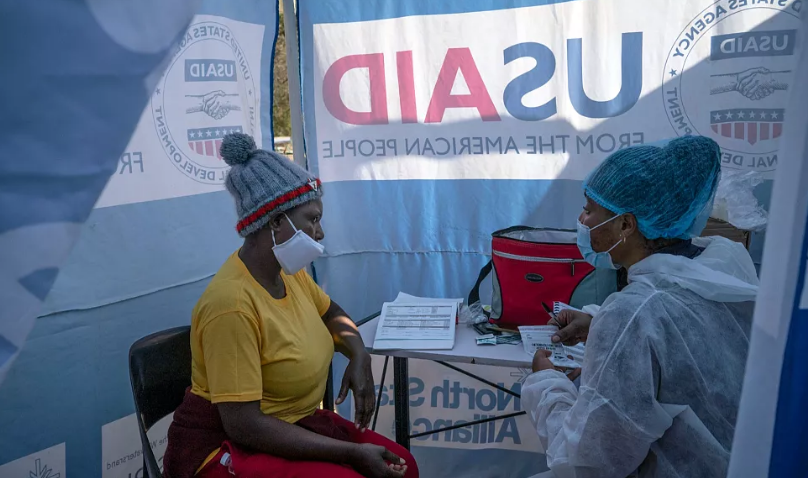
The United States, historically the largest global health donor, is projected to slash its foreign assistance by 67 percent this year compared to 2024. The cuts include potential cancellation of previously approved funding for key programs such as the U.S. Agency for International Development (USAID), the President’s Emergency Plan for AIDS Relief (PEPFAR), and Gavi, the vaccine-sharing alliance.
The UK and Germany have also made substantial reductions, with much of the redirected funding going toward defence budgets. France, meanwhile, cut back its global health contributions due to domestic scrutiny over the effectiveness of its aid spending.
However, not all wealthy nations are following suit. Australia, Japan, and South Korea have modestly increased their health aid this year, while Canada, China, and the United Arab Emirates maintained previous spending levels. Still, IHME researchers caution that these increases are not enough to offset the impact of widespread funding withdrawals.
The findings come at a critical time as global health systems continue to recover from the pandemic. Aid organizations and health advocates are calling on governments to reconsider the cuts and recommit to international health targets, warning that without renewed investment, vulnerable populations will face growing health risks and widening disparities in care.
