


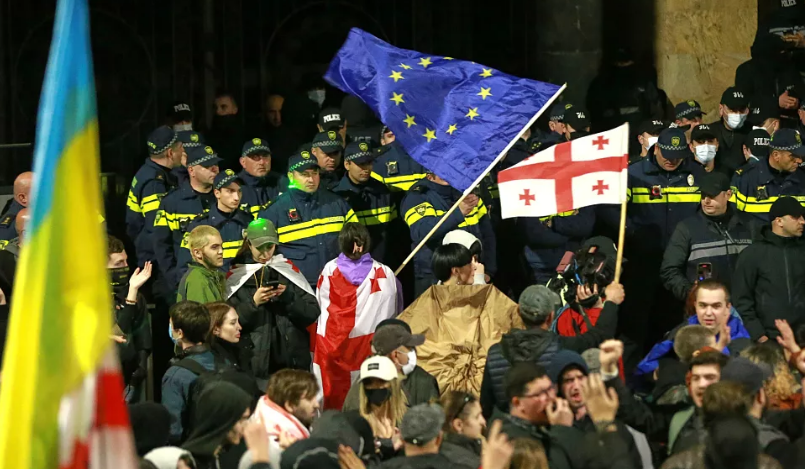
European foreign ministers have issued a joint statement expressing deep concern over what they described as a “deteriorating situation” in Georgia, warning that the country is veering away from democratic norms and risking its path to European Union membership.
The strongly worded statement follows a recent progress report approved by the European Parliament assessing Georgia’s accession process. A majority of EU lawmakers condemned what they called a regression in the rule of law and increasing Russian influence over the ruling Georgian Dream party.
“We are disturbed and deeply concerned by the growing authoritarian tendencies in Georgia,” the statement read, adding that the country’s democratic achievements are “rapidly being dismantled.”
Tensions between Brussels and Tbilisi have escalated in recent months, particularly after a wave of arrests targeting opposition politicians and journalists. The European Parliament also raised alarm over Georgia’s growing alignment with Moscow, which NATO and the EU see as a strategic threat in the South Caucasus region.
Last month, several prominent opposition figures were jailed amid a broader crackdown that followed a controversial election in October 2023. Critics allege the vote, which handed Georgian Dream another term, was neither free nor fair. Protests have since erupted in the capital Tbilisi, with demonstrators demanding democratic reforms and renewed efforts to join the EU.
Georgian Dream has rejected allegations of political persecution. Party Secretary General Kakha Kaladze defended the arrests, stating, “No one is above the law, including politicians.” He insisted the actions were not politically motivated.
However, the joint statement by European foreign ministers claimed the detentions contribute to the erosion of democratic governance and urged Georgian authorities to release those “unjustly imprisoned.” They called for immediate national dialogue involving all political actors to restore trust and prevent further deterioration in EU-Georgia relations.
“The authoritarian and anti-European course adopted by the current leadership threatens Georgia’s European aspirations,” the ministers warned.
Prime Minister Irakli Kobakhidze has pushed back against the criticism, telling Euronews in May that Georgia plays a “vital role for Europe,” particularly for the eurozone’s strategic interests in the region. “Dialogue with Georgian leaders is more important now than ever,” he said.
Georgia applied for EU membership in March 2022 alongside Ukraine and Moldova, and was granted candidate status in December 2023. However, the latest developments have cast doubt over the country’s accession timeline and its commitment to EU principles.
