


A new scientific study has found evidence of potentially harmful “forever chemicals” in reusable menstrual and incontinence products, raising alarms about the safety of widely used items marketed as eco-friendly alternatives.
Published in the journal Environmental Science and Technology Letters, the peer-reviewed study examined 59 products from North America, South America, and Europe. Researchers found that nearly 30% contained elevated levels of fluorine, a marker used to identify per- and polyfluoroalkyl substances (PFAS)—a group of synthetic chemicals known for their durability and resistance to degradation.
Period underwear and reusable pads were found to contain the highest concentrations of PFAS, suggesting they were added intentionally during manufacturing to provide properties like water resistance. In contrast, other items like menstrual cups and incontinence products showed lower levels, indicating possible incidental contamination.
PFAS, often dubbed “forever chemicals,” are associated with a range of health risks, including immune suppression, liver damage, fertility issues, and certain cancers. Two PFAS compounds—PFOA and PFOS—are classified by the World Health Organization as carcinogenic or possibly carcinogenic, and are banned in the European Union.
“These chemicals are not necessary to make menstrual products functional,” said Marta Venier, one of the study’s authors and an environmental chemist at Indiana University. “We identified several products with no intentional PFAS, showing it is possible to manufacture these items without using harmful substances.”
Health experts warn that the presence of PFAS in menstrual products is especially concerning due to the prolonged and intimate skin contact involved. “Skin is a good barrier, but in the case of menstrual products, we are dealing with the vaginal area, which is more permeable,” explained Tina Kold Jensen, a physician and environmental epidemiologist at the University of Southern Denmark.
Jensen noted that exposure to PFAS through hygiene products could lead to long-term accumulation in the body, posing a risk to reproductive health and even affecting newborns through placental transfer or breast milk.
While reusable menstrual products are generally promoted for their environmental benefits, this study underscores the need for stricter regulation and clearer labeling of chemical content. According to a 2022 survey in Spain, reusable menstrual products were more popular than disposable options among women aged 26 to 35.
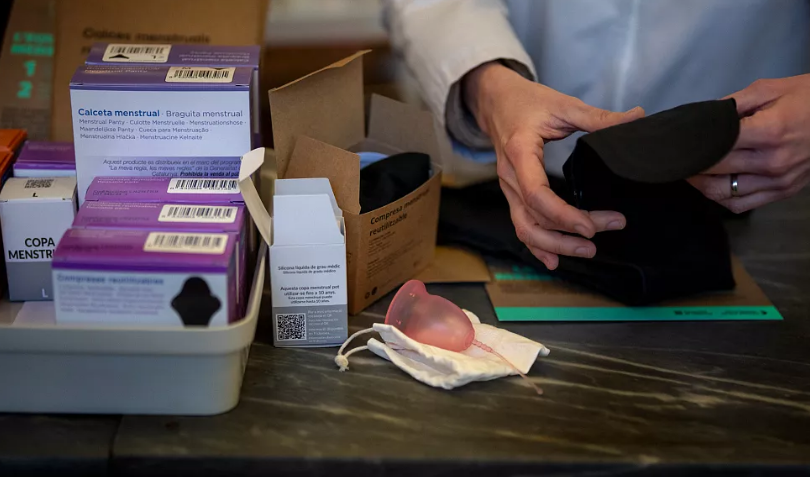
Government initiatives, like Catalonia’s free menstrual product scheme, aim to reduce waste and period poverty—but researchers stress the importance of ensuring such products are free of toxic substances.
The issue of PFAS in menstrual products is not new. In 2023, UK-based consumer group Which? found high silver levels in some popular period underwear brands. In the U.S., Thinx faced a class-action lawsuit after PFAS were detected in its products. The case was settled in 2022.
