


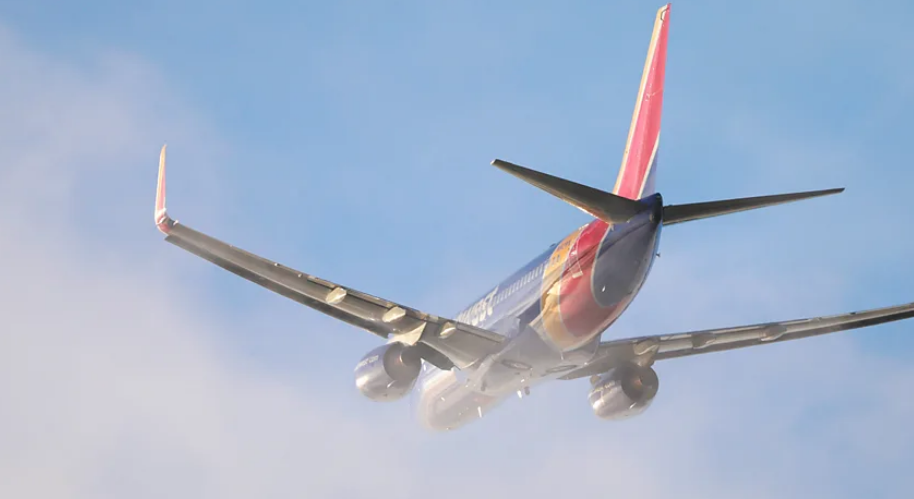
Severe turbulence is becoming more frequent and intense due to climate change, and aircraft designers are racing to find solutions to mitigate its growing impact on air travel.
Incidents like the violent turbulence that struck a Singapore Airlines flight over Myanmar in 2024 — which left passengers injured and blood on the cabin ceiling — and a United Airlines flight that saw a flight attendant hurled into the ceiling over the Philippines earlier this year, are becoming increasingly common. According to research by Paul Williams, a professor of atmospheric science at the University of Reading, clear-air turbulence has risen by 55% since 1979 and is expected to triple globally by 2050.
Turbulence not only causes discomfort and risk to passengers but also results in higher operational costs for airlines due to aircraft damage, longer flight paths, and increased fuel consumption. With more chaotic atmospheric patterns on the horizon, scientists and engineers are turning to innovative technologies to make flying safer and smoother.
One such solution comes from Austrian firm Turbulence Solutions, which has developed dynamic “flaplets” for aircraft wings. These small devices respond to changes in airflow by adjusting their angle in real-time, reducing the impact of turbulence. Tested so far on smaller aircraft, the technology has shown potential to decrease turbulence loads by over 80%, according to the company.
“We’re saying turbulence doesn’t have to be passively endured,” said CEO Andras Galffy. “With the right counter-signals, it can be actively managed, even in larger aircraft.”
Meanwhile, artificial intelligence is offering powerful new tools to detect and respond to turbulence. Researchers at the KTH Royal Institute of Technology in Sweden, in collaboration with institutions in Spain and the Netherlands, have tested AI-controlled synthetic air jets to stabilize airflow on simulated aircraft wings. Using deep reinforcement learning, the AI adapts in real-time to airflow changes and can predict turbulence based on sensor data.
At NASA’s Langley Research Center, researchers are also testing infrasound microphones capable of detecting turbulence hundreds of kilometers away, while other teams are exploring dual-wavelength Lidar systems to map turbulent air masses ahead of a plane’s path. However, such systems still face challenges in terms of weight, size, and energy use on commercial aircraft.
Data-sharing initiatives like IATA’s Turbulence Aware program are already helping airlines like Air France and EasyJet avoid turbulent zones by collecting real-time data from aircraft sensors. Forecasting tools have improved significantly — from 60% accuracy two decades ago to 75% today — but researchers like Williams say more progress depends on greater access to high-quality turbulence data from aircraft.
With air travel facing growing risks from climate change, experts agree that tackling turbulence will require a combination of real-time data, smart engineering, and AI-powered forecasting tools. For now, while buckling up remains the frontline defense, the industry is looking toward a future where flying through rough skies could be far less jarring.
