


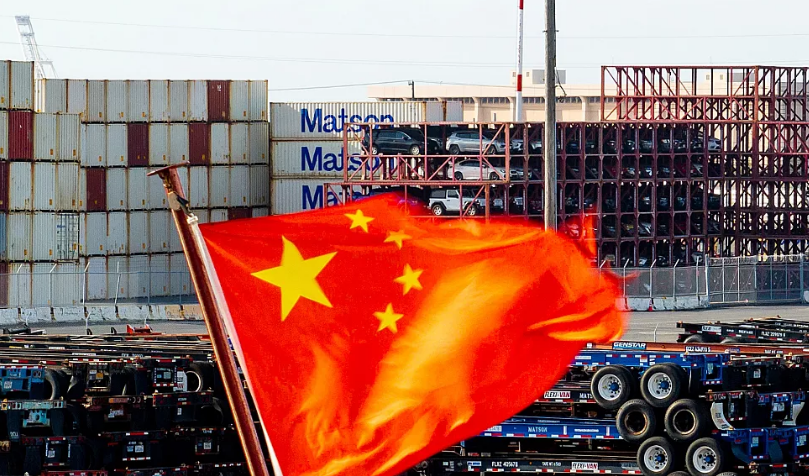
High-level talks between U.S. Treasury Secretary Scott Bessent and Chinese Vice Premier He Lifeng kicked off in Stockholm on Monday, setting the stage for a possible meeting later this year between U.S. President Donald Trump and Chinese President Xi Jinping. The negotiations are expected to shape the next phase of U.S.-China trade relations, with officials focusing on tariffs, industrial policy, and fentanyl-related sanctions.
The Stockholm discussions mark the third round of talks this year and come amid heightened economic and geopolitical tensions. Trump previously imposed sweeping tariffs on Chinese goods, raising levies to 145% in some cases, citing Beijing’s failure to curb the export of chemicals used in the production of fentanyl. The talks are expected to maintain the current tariff levels if no broader agreement is reached, officials said.
“We have the confines of a deal with China,” President Trump said on Friday, hinting at progress but stopping short of announcing any resolution.
Bessent echoed a similar tone last week, stating that Washington and Beijing had reached a “status quo,” with the U.S. imposing a 30% tariff on Chinese imports and China responding with a 10% levy. He added that the focus now shifts to deeper structural issues, including market access for American companies and encouraging China to rely more on domestic consumption.
Beijing, for its part, expressed hope for “more consensus and cooperation and less misperception,” according to a statement from the Chinese embassy in Washington.
Analysts say the talks in Stockholm could help frame the agenda for a potential Trump-Xi summit in the fall. “Beijing will likely insist on detailed preparations before they agree to a leaders’ meeting,” said Wendy Cutler, a former U.S. trade negotiator and current vice president at the Asia Society Policy Institute.
Key points under negotiation include the fentanyl-linked 20% U.S. tariff, Chinese industrial overcapacity, and Beijing’s energy trade with Russia and Iran. In July, China moved to tighten controls on two fentanyl precursor chemicals, signaling willingness to address American concerns.
However, any comprehensive deal remains uncertain. “It’s unlikely we’ll see a grand bargain,” said Gabriel Wildau of the consultancy Teneo. “A more limited agreement focused on fentanyl and modest tariff relief is a more probable outcome.”
Business leaders are also watching closely. “What we’re really looking for is the atmosphere,” said Sean Stein, president of the U.S.-China Business Council. “Any signal of a forthcoming Trump-Xi summit would be significant.”
While a breakthrough remains elusive, Stockholm represents a key moment in efforts to stabilize trade ties between the world’s two largest economies—before both sides return to the negotiating table in the fall.
