


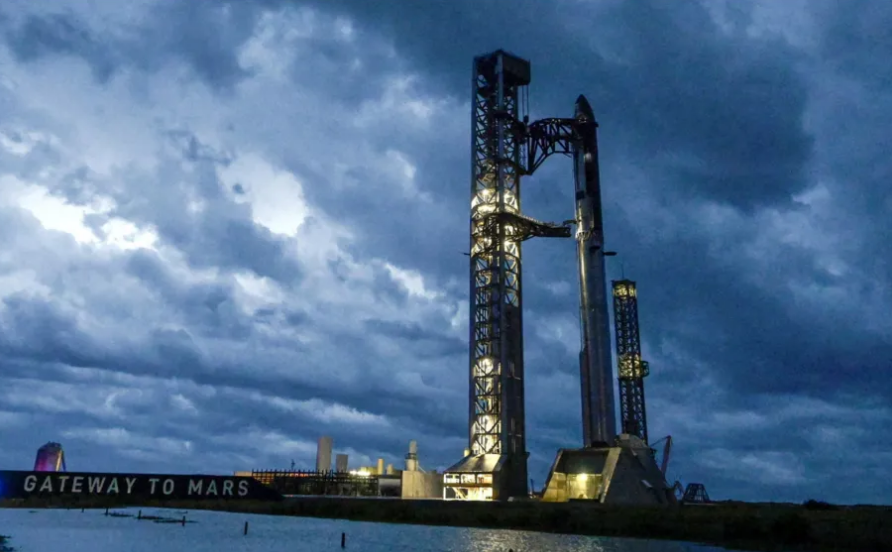
Elon Musk’s SpaceX has postponed the latest launch of its Starship rocket, pushing the highly anticipated test flight to Friday after a technical issue forced a last-minute delay. The setback comes at a pivotal moment for the company as it prepares for what could become the largest initial public offering in Wall Street history.
The uncrewed mission was intended to mark the debut of Starship V3, the newest version of the company’s flagship launch system. SpaceX confirmed the delay was caused by a malfunction involving a hydraulic pin on the launch tower. Musk said the company would attempt another launch at 5:30 p.m. Central Time on Friday if the issue is resolved in time.
“If that can be fixed tonight, there will be another launch attempt tomorrow,” Musk posted on social media.
The test flight is seen as a key milestone for SpaceX, which is preparing for a planned stock market listing on the Nasdaq under the ticker SPCX. The IPO could launch as early as next month and is expected to be the largest ever recorded, with analysts suggesting it could redefine valuations in the global technology sector.
The listing could also have major implications for Musk’s personal wealth. Already the world’s richest individual, Musk’s majority stake in SpaceX could push his net worth beyond the trillion-dollar mark if market expectations are met.
SpaceX has described Starship as “the most powerful launch system ever developed,” designed for both deep space missions and rapid satellite deployment. According to company filings, the V3 model is expected to carry payloads of up to 100 metric tons, with future versions targeting double that capacity. The system has been engineered for missions supporting NASA’s lunar programme as well as the company’s expanding Starlink satellite network.
Development of Starship has cost more than $15 billion, reflecting years of engineering challenges and repeated test delays. The programme remains central to SpaceX’s long-term strategy of reducing launch costs through full rocket reusability.
The company’s financial disclosures highlight both rapid growth and significant losses. In the first quarter of this year, SpaceX reported $4.7 billion in sales but recorded a net loss of $4.3 billion. For the full previous year, revenue reached $18.6 billion, while losses stood at $4.9 billion.
Beyond rockets, SpaceX operates the Starlink internet constellation and holds interests in artificial intelligence ventures through xAI, further expanding its technology portfolio.
The upcoming Starship test flight is being closely watched by investors, engineers and competitors alike, with performance seen as a critical factor in shaping sentiment ahead of the planned public listing.
