


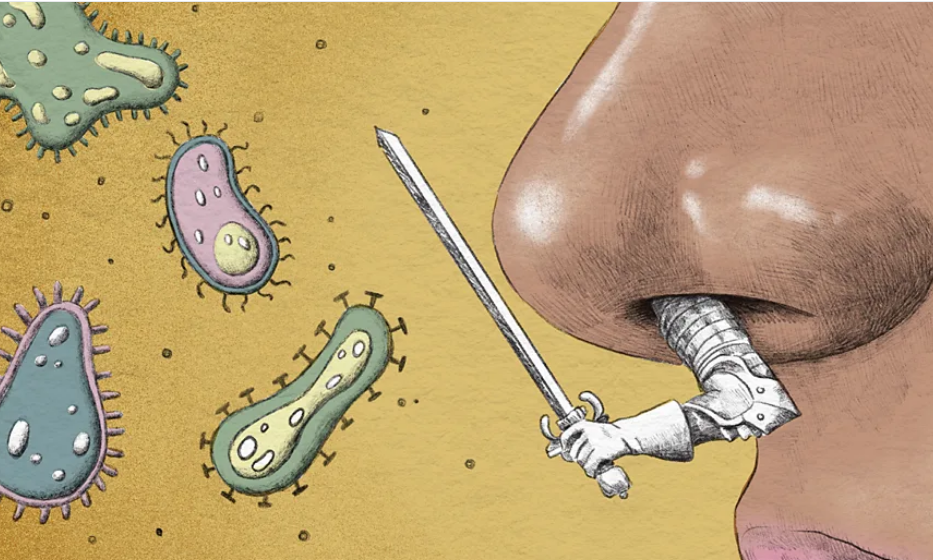
Long dismissed as little more than an unpleasant by-product of a cold, snot is now being hailed by scientists as a powerful line of defence against disease—and a potential tool in diagnosing and preventing illness.
New research is shedding light on the vital role nasal mucus plays in immune health, highlighting not only its protective properties but also its diagnostic potential. While snot has featured in medical thinking since ancient Greece—where Hippocrates considered phlegm one of the four humours governing human health—modern science is now offering hard evidence of its importance in keeping us well.
Produced daily in amounts exceeding 100 millilitres in adults (and even more in children), nasal mucus serves as a first line of defence. It moisturises the nasal passages and traps dust, pollen, bacteria, and viruses before they can reach the lungs. Tiny hairs in the nose, called cilia, work in tandem with mucus to move harmful particles out of the body.
More recently, scientists have discovered that the colour and consistency of snot can be early indicators of what’s happening in the body. Clear mucus may indicate allergies, white suggests a viral infection, and yellow or green signals that white blood cells are fighting off illness. Pink or red mucus usually indicates irritation or minor bleeding inside the nasal cavity.
But researchers are now going beyond colour codes. A growing body of evidence points to the critical role of the snot microbiome—the ecosystem of bacteria, viruses, and fungi living in nasal mucus—in shaping our immune responses. Daniela Ferreira, a professor of respiratory infection and vaccinology at the University of Oxford, is leading research into what defines a healthy nasal microbiome and how it might be manipulated to fight infection.
“We’re investigating whether we can develop nasal sprays with beneficial bacteria that prevent harmful microbes from taking hold,” Ferreira explained. Her team believes that boosting the ‘good’ bacteria in our noses could improve immunity and even enhance vaccine effectiveness.
In Sweden, researchers have already tested the concept with surprising results. A pilot study involved 22 adults self-administering nasal sprays made from the mucus of healthy donors. The participants, who suffered from chronic sinus conditions and hay fever, reported symptom reductions of nearly 40% for up to three months. Inspired by gut microbiome therapies, the study marked a promising step toward “snot transplants.”
Larger clinical trials are now underway to examine how the nasal microbiome changes after treatment and whether the introduced bacteria can successfully colonise and protect the airways over the long term.
With mounting evidence linking nasal bacteria to vaccine response and disease prevention, scientists believe snot could become a key tool in the future of personalised medicine. From diagnosing chronic conditions to fine-tuning vaccines, the sticky substance we often overlook might just hold the key to stronger, more resilient immune systems.
