


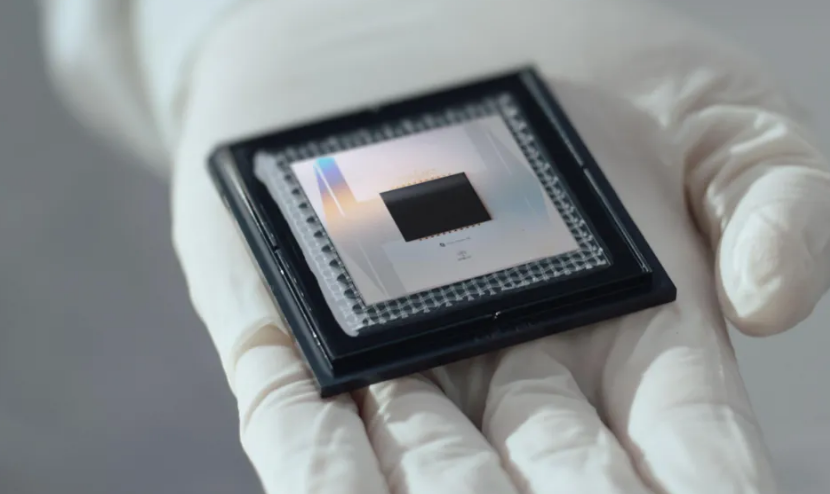
Google has announced a new partnership with the UK designed to open its advanced quantum processor, known as Willow, to researchers across the country through a formal competition. The agreement gives scientists access to one of the most closely watched quantum chips in development, marking a significant step for the UK’s ambition to expand its role in next-generation computing.
Quantum technology is widely regarded as a major emerging field, with the potential to solve problems in chemistry, medicine and materials science that are currently beyond the reach of classical computers. While the full capabilities of quantum machines have not yet been realised, global companies are engaged in a race to produce systems that can handle real-world tasks.
Under the new arrangement, scientists in the UK will be invited to submit proposals outlining how they aim to use Willow in experimental research. Selected projects will be carried out in collaboration with experts from Google and the National Quantum Computing Centre (NQCC), the government-funded laboratory responsible for supporting the country’s quantum infrastructure.
Professor Paul Stevenson of the University of Surrey, who is not involved in the partnership, said the announcement marks a major opportunity for academics. “The new ability to access Google’s Willow processor, through open competition, puts UK researchers in an enviable position,” he told the BBC, adding that Google also stands to gain from the expertise within UK universities.
When Willow was unveiled in 2024, it was described by analysts as an important development in the field due to its design and processing stability. It now sits alongside competing technologies being developed by Amazon, IBM and other firms investing heavily in quantum platforms. The deal highlights the increasingly competitive landscape as companies seek to demonstrate progress during a period of rapid scientific discovery.
The UK is already home to a growing commercial sector. Quantinuum, which operates from Cambridge and Colorado, reached a valuation of $10 billion last year, while several domestic firms have installed systems at the NQCC, including Quantum Motion, ORCA and Oxford Ionics. Officials say the government is committing £670 million to support quantum research as part of its wider industrial strategy.
Dr Michael Cuthbert, Director of the NQCC, said the partnership with Google will “accelerate discovery” and support experiments that could pave the way for practical quantum applications. He noted that advances made through shared access to Willow could have an impact in areas such as life sciences, materials research and fundamental physics.
Government forecasts suggest quantum technologies could add £11 billion to the UK economy by 2045. With major companies and national institutions contributing to rapid progress, experts believe machines capable of delivering meaningful results could emerge within the next decade.
