


Chinese technology giant Xiaomi is stepping up its push into the electric vehicle market, unveiling plans to enter Europe in 2027 as it broadens its model range and strengthens its automotive operations.
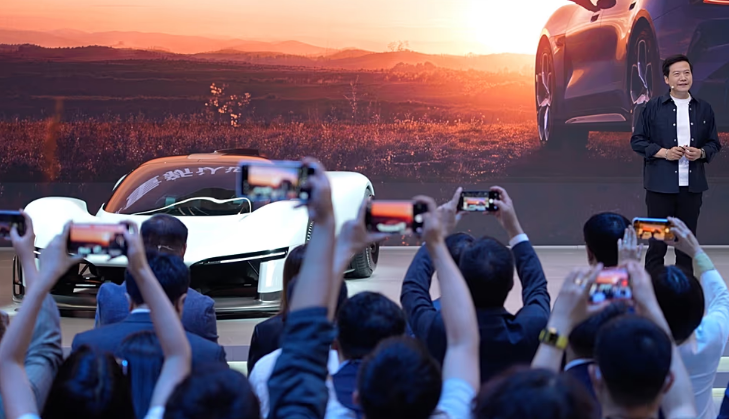
The company’s growing ambitions were on full display at Auto China 2026 in Beijing, where Xiaomi drew large crowds eager to see its latest electric vehicles and hear from founder and chief executive Lei Jun. Already a household name in China’s consumer electronics market, Lei has quickly become one of the most closely watched figures in the country’s rapidly expanding EV industry.
Earlier this month, Lei attracted widespread attention by personally driving a Xiaomi SU7 Pro from Beijing to Shanghai, a journey of roughly 1,300 kilometres, with only one charging stop. The trip, livestreamed across social media, served as a public demonstration of the vehicle’s range and performance.
At the Beijing motor show, Xiaomi showcased its Vision Gran Turismo concept for the first time in China and provided updates on its expanding lineup, including the next-generation SU7 and the upcoming YU7 GT.
Xiaomi entered the electric vehicle market in 2024 with the launch of the SU7. Since then, its rise has been rapid. The YU7, introduced later, attracted 200,000 pre-orders within minutes of its debut, underscoring strong consumer demand.
The company is now preparing to launch the YU7 GT, its first model developed with significant input from European engineers. The vehicle is expected to debut in China later this month.
Performance has become central to Xiaomi’s automotive identity. Its SU7 Ultra can accelerate from zero to 100 kilometres per hour in under two seconds and reach a top speed of 350 kilometres per hour, placing it among the world’s highest-performing electric sedans.
Production is also ramping up quickly. At Xiaomi’s Beijing factory, a new vehicle rolls off the assembly line every 76 seconds. The highly automated facility uses more than 700 robots and advanced artificial intelligence systems for quality control and testing.
Beyond hardware, Xiaomi is betting on connectivity. Its “Human x Car x Home” strategy links vehicles with smartphones and smart home devices through its HyperOS platform, allowing drivers to seamlessly manage home and digital services from their cars.
With domestic momentum building, Xiaomi is now focusing on overseas expansion. Germany is expected to become its first European market. To support that effort, the company opened an EV research and design centre in Munich last year, led by former BMW executive Rudolf Dittrich.
The centre is working to tailor Xiaomi’s vehicles to European regulations, infrastructure and consumer preferences.
Xiaomi faces stiff competition from established brands such as Volkswagen and Tesla, as well as fellow Chinese manufacturers including BYD and XPeng. Additional European tariffs on Chinese-made EVs may also pose challenges.
Still, Xiaomi remains ambitious. The company aims to deliver 550,000 electric vehicles this year and has set a long-term target of becoming one of the world’s top five automakers.
