


The Computex technology conference in Taiwan brought together some of the most unusual and forward-looking innovations in robotics, artificial intelligence and computing hardware, offering a glimpse into how emerging technologies may reshape everyday life.
Euronews Next explored the exhibition halls, where global tech companies and startups showcased a mix of practical tools and experimental designs, ranging from automated service robots to advanced defence systems and next-generation communication devices.
One of the standout exhibits was a robot barista developed with Intel technology. The machine, named Ella, prepares coffee autonomously while being powered by Intel’s Series 3 processor. Behind the scenes, three AI agents coordinate customer interaction, system operations and overall store management on a single system-on-chip. Intel described it as a step toward fully integrated physical AI environments where machines handle both decision-making and execution.
Robotics also featured prominently in industrial and healthcare applications. Taiwan’s Foxconn demonstrated multi-functional robots designed for factory and medical use. In manufacturing settings, the robot is capable of performing dual tasks such as drilling with one arm while loading or unloading objects with the other. In healthcare demonstrations, a system called “Scrub Nurse” assists surgeons in operating rooms by handing over instruments and responding to voice commands, reflecting growing interest in human-robot collaboration in sensitive environments.
Defence technology was another major focus at the event. Given Taiwan’s geopolitical position near mainland China, surveillance systems and unmanned platforms drew significant attention. Companies such as Rayvatek presented unmanned aerial and surface vehicles powered by AI-enabled chips, including Nvidia processors. The National Chung-Shan Institute of Science and Technology also showcased AI-driven robotic dogs designed for autonomous patrol missions and remote-controlled operational support.
Communication technology took a different direction with innovations such as AI-powered translation earbuds developed by Transbuds, a Chinese and Taiwanese company. The device connects translation software with voice-mimicking tools, allowing real-time multilingual conversations that replicate the speaker’s tone. The company is also exploring advanced AI agents capable of making phone calls and completing tasks such as booking restaurant reservations, although regulatory restrictions currently limit availability in Europe and the United States.
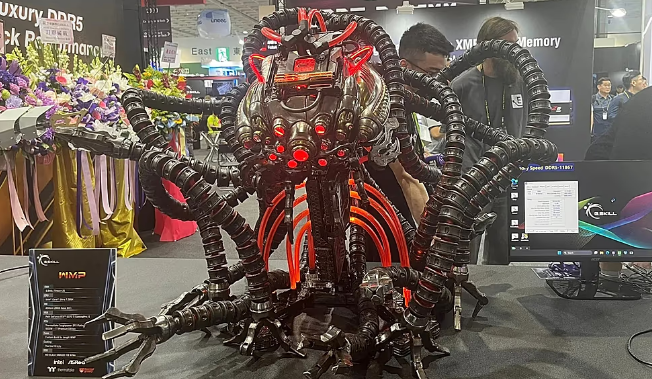
Alongside high-tech systems, Computex also highlighted creative hardware designs, particularly customised and visually striking computer cases. These designs reflect a growing trend among hardware enthusiasts who combine performance with aesthetic innovation.
Together, the exhibits underscored how artificial intelligence and robotics are increasingly embedded across industries, from manufacturing and healthcare to communication and defence. While some technologies remain in early development or restricted markets, the showcase highlighted a clear direction toward greater automation and AI-driven systems shaping future digital and physical environments.
