


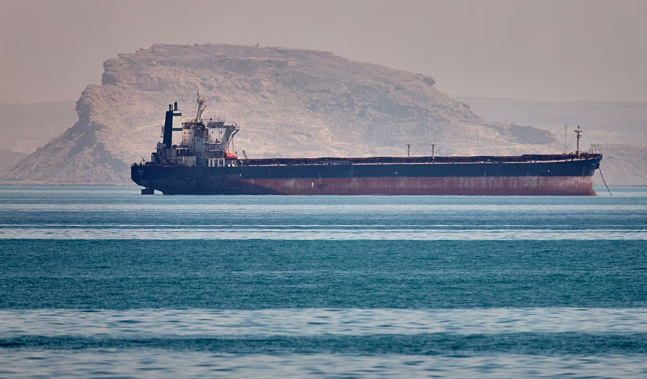
Iran has said the Strait of Hormuz will remain closed to commercial traffic until the United States lifts its naval blockade, releases frozen Iranian assets and removes oil sanctions, as an unidentified projectile struck a vessel transiting the strategic waterway.
Parliament Speaker Mohammad Bagher Ghalibaf said Tuesday that the strait would not reopen until Washington fulfilled commitments demanded by Tehran.
“I want to state clearly that the Strait of Hormuz will not be opened until the American commitments stipulated in the memorandum of understanding… are implemented,” Ghalibaf said in a speech broadcast on Iranian state television.
He listed an end to the US blockade, the removal of oil sanctions and the release of Iranian assets held overseas among the conditions for reopening the waterway.
The statement came after the UK Maritime Trade Operations agency, known as UKMTO, reported that an unidentified projectile struck a ship early Tuesday while it was attempting to pass through the strait off the coast of Oman.
The projectile damaged the vessel’s engine room and resulted in at least one crew casualty, UKMTO said, citing information from the ship’s security office. The agency did not identify the vessel or provide details about its cargo.
It was not immediately clear whether the crew member had been killed or injured. The Omani Coast Guard was assisting the remaining crew and authorities were investigating the incident.
No environmental damage was reported following the attack, according to UKMTO. The development comes amid concerns over potential oil spills from damaged vessels in and around the Persian Gulf.
Iran effectively closed the Strait of Hormuz after Israel and the United States launched attacks against Iran on February 28. Before the conflict, the narrow waterway handled roughly one-fifth of global oil trade.
The United States is also blocking Iranian shipping traffic through the strait, according to the report.
With direct negotiations stalled, Iran has been holding separate discussions with Oman over arrangements for managing ships that need to transit the waterway. Tehran said Monday that details of a joint statement were being finalised.
Oman has maintained relations with both Iran and the United States during the conflict and has served as a diplomatic intermediary between the two sides.
Tensions have increased after US President Donald Trump reportedly warned Oman against interfering with American actions in the region. Trump has also said he would soon declare the Strait of Hormuz “a territory of the United States”.
Iranian Deputy Foreign Minister Kazem Gharibabadi rejected the claim, saying the waterway remained under Iranian control.
The Strait of Hormuz is about 35 kilometres wide at its narrowest point, with Iran and Oman both bordering the strategic passage.
The latest attack and Iran’s refusal to reopen the waterway have increased uncertainty for global energy markets, with governments and shipping companies watching closely for any further disruption to one of the world’s most important oil transit routes.
