


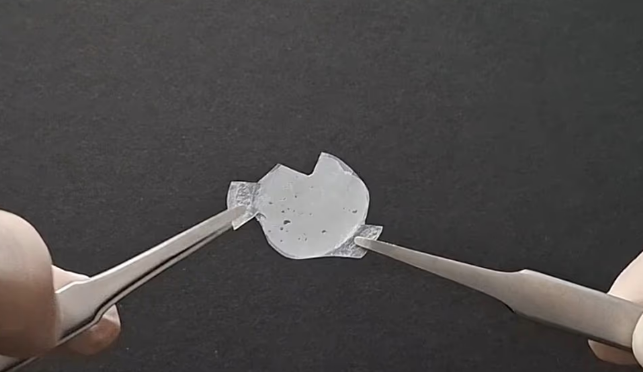
Researchers in Spain have developed a polymer nanostructure that can cool sun-exposed surfaces without electricity by sending heat directly into outer space, potentially reducing dependence on air conditioning in buildings, vehicles and electronic devices.
The technology was developed by scientists at the Institute of Micro and Nanotechnology (IMN-CNM), part of Spain’s National Research Council (CSIC). Their findings, published in Nanophotonics, focus on daytime passive radiative cooling, a process that uses a natural property of Earth’s atmosphere.
The atmosphere has an infrared range between 8 and 13 micrometres known as the atmospheric window. Heat can pass through this band and escape directly into space. Materials designed to emit heat within this range while reflecting sunlight can therefore become cooler than their surroundings without requiring compressors or electrical power.
The research team selected polyvinylidene fluoride (PVDF), a polymer with strong infrared emission properties. Cristina Vicente, a researcher at IMN-CNM and leader of the COOLed project, said the material also resists ultraviolet radiation, repels water and can withstand outdoor conditions.
The main advance came from changing the polymer’s structure at the nanoscale. Researchers infiltrated PVDF into nanoporous templates made from anodised aluminium oxide, producing three-dimensional structures with precisely controlled internal geometry.
The optimised material reflected an average of 82.4 percent of incoming solar radiation and emitted 96.7 percent of heat within the 8 to 13 micrometre atmospheric window.
Researchers calculated that the material could provide a cooling capacity of 182.3 watts per square metre under solar radiation of 1,000 watts per square metre.
Outdoor testing in Tres Cantos near Madrid supported the laboratory results. During rooftop experiments conducted under strong sunlight, the treated material remained as much as 12.9 degrees Celsius cooler than an untreated reference surface on the hottest, driest and sunniest days.
The researchers said the process used to make the material is relatively inexpensive and could be compatible with existing industrial manufacturing methods.
That could allow the technology to be adapted for a range of uses, including building roofs and façades, vehicle surfaces, electronic equipment and personal cooling systems.
Cooling already represents a major share of electricity use worldwide, increasing pressure on energy systems during periods of extreme heat. A passive technology that can reduce surface temperatures without consuming electricity could therefore help lower cooling demand and associated emissions.
The Spanish team stressed that the technology remains under development and will require further work before large-scale commercial use.
However, the results suggest that carefully designed nanostructures could provide an alternative way to keep surfaces cooler under direct sunlight while using no electricity during operation.
