


The United States Department of Defense has announced plans to withdraw around 5,000 troops from Germany, deepening political friction between Washington and Berlin following sharp exchanges over the ongoing war with Iran.
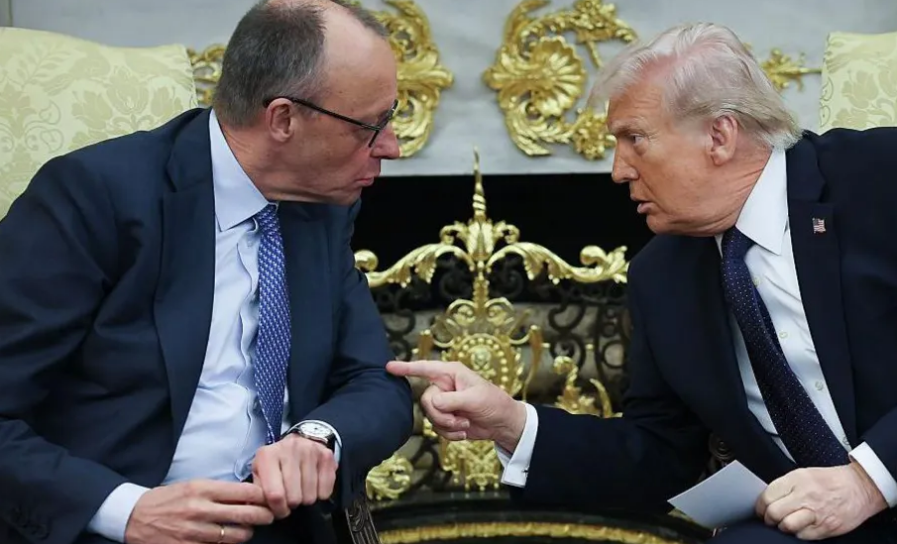
The decision comes just a day after US President Donald Trump publicly criticised German Chancellor Friedrich Merz, who had suggested that US negotiators had been “humiliated” in talks involving Iran. The remarks have intensified already strained relations between the two allies.
The Pentagon confirmed that the drawdown will reduce part of the US military presence currently stationed across Germany, where more than 36,000 active-duty personnel are based. The reduction, according to officials, follows an internal review of US force positioning in Europe.
Pentagon spokesperson Sean Parnell said the move reflects “theatre requirements and conditions on the ground” and is expected to be completed within six to twelve months. He added that the review considered global operational priorities and strategic adjustments.
German Defence Minister Boris Pistorius acknowledged the announcement, noting that a potential reduction in US forces had been anticipated. While he emphasised that American troops remain vital to European and US interests, he said the decision was not unexpected given broader discussions about NATO deployments.
Tensions between Washington and Berlin have escalated in recent weeks. Trump has repeatedly criticised Merz’s handling of domestic and foreign policy issues, including immigration and energy, and has suggested that US troops could also be reassigned from Italy and Spain.
Speaking to reporters, Trump said he saw no reason to maintain current troop levels in certain European countries, accusing some allies of failing to support US operations related to the Iran conflict.
Merz, in earlier comments, had questioned the US strategy in the Middle East, arguing that Washington lacked a clear exit plan. He also suggested that Iran had effectively outmanoeuvred US negotiators in recent talks hosted in Islamabad. His remarks about Iran’s leadership and the perceived “humiliation” of Western negotiators drew a strong response from Trump, who accused him of misunderstanding the situation and criticised Germany’s economic performance.
The US maintains its largest overseas military presence in Germany, with key facilities such as Ramstein Air Base serving as central hubs for NATO operations. Smaller deployments are located in Italy and the United Kingdom.
Previous US administrations have considered troop reductions in Europe, but earlier proposals were either reversed or blocked. In recent years, Germany has significantly increased its defence spending, now projected to reach over 3% of GDP, a shift welcomed in Washington despite current disagreements.
Trump has long argued that European allies should take greater responsibility for their own defence, while critics in Congress and Eastern Europe have warned that reducing US forces could weaken NATO deterrence.
The latest announcement signals a renewed shift in US military posture, with increased focus expected on other global regions, even as transatlantic tensions continue to grow.
