


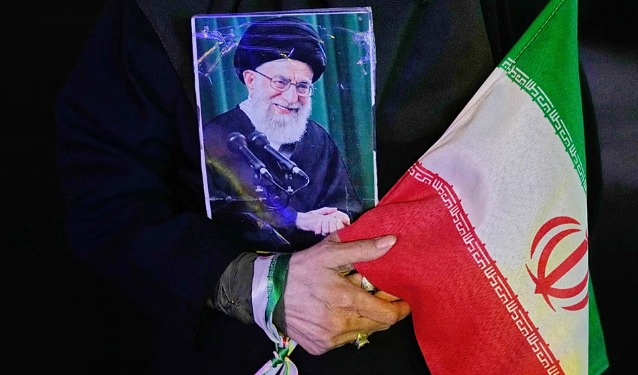
The funeral comes nearly four months after Khamenei was killed in the opening US-Israeli strikes on February 28. Iranian authorities delayed the burial because of the conflict, the subsequent ceasefire and ongoing diplomatic efforts with the United States. Officials said the ceremonies will now take place during a period of relative calm as negotiations continue over the Strait of Hormuz, Iran’s nuclear programme and sanctions.
Khamenei served as Iran’s supreme leader for 37 years after succeeding Ayatollah Ruhollah Khomeini in 1989. Before assuming the country’s highest political and religious office, he served as Iran’s president from 1981 to 1989.
The funeral ceremonies will begin on Saturday and Sunday at Tehran’s Mosalla prayer complex, a venue traditionally used for major national religious gatherings and state commemorations.
The main funeral procession is scheduled for Monday, following a 10-kilometre route from Imam Hossein Square to Azadi Square. Tehran Mayor Alireza Zakani has said around 20 million people are expected to participate, which would make it the largest public gathering in the capital’s history.
Following the Tehran events, the procession will move to the holy city of Qom on July 7 before continuing to Iraq for ceremonies in Najaf and Karbala, home to some of Shiite Islam’s most sacred shrines. The final burial will take place in Mashhad, Khamenei’s birthplace and the location of the shrine of Imam Reza. Authorities estimate that between eight and ten million mourners could attend the burial ceremony there.
Security preparations are extensive. The Basij volunteer force is coordinating logistics, while the Islamic Revolutionary Guard Corps has been assigned responsibility for crowd control and security. Schools, mosques, sports halls and universities will provide temporary accommodation for visitors, highways will serve as parking areas and access to major cities is expected to be tightly controlled. Domestic flights may also face disruptions during the ceremonies.
Pakistan has confirmed that President Asif Ali Zardari and Prime Minister Shehbaz Sharif will send an official delegation to attend the funeral. It remains unclear which senior officials from Gulf Arab states, Russia and China will participate.
Questions also remain over whether Iran’s new supreme leader, Ayatollah Mojtaba Khamenei, will appear in public during the ceremonies. He has not been seen publicly since assuming the position following his father’s death, while media reports have claimed he was injured during the conflict. Iranian authorities have not commented on those reports.
The funeral takes place as Iran and the United States continue negotiations under a memorandum of understanding signed on June 17. Talks remain focused on Iran’s nuclear programme, sanctions relief and maritime security in the Strait of Hormuz, with another round of discussions expected in Doha in the coming days.
