


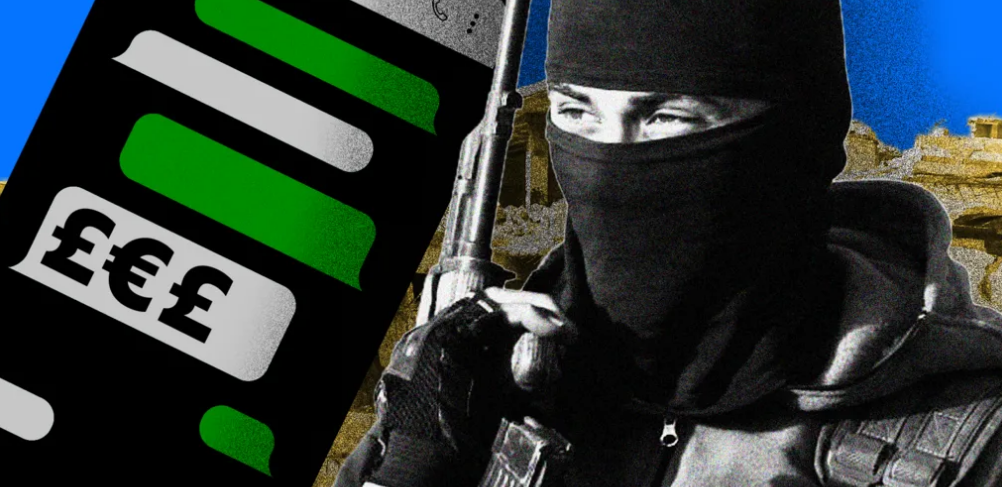
A WhatsApp group with more than 500 members was used to arrange hundreds of millions of euros in cash transfers across the world, including payments linked to organised crime and Islamic State militants, an investigation by European broadcasters has found.
The 532-member group, known as “Traders of Greater Europe”, contained more than 82,000 messages exchanged between February and December 2022. Members used the chat to organise cash deliveries across borders for clients, including transfers to London and Birmingham.
The investigation was carried out by the European Broadcasting Union’s investigative journalism network, which includes the BBC. It found evidence that the network was involved in transactions using hawala, an informal money transfer system that can operate without conventional banking records.
In one case, money sent from Brussels was passed to Islamic State members in Syria. Belgian authorities discovered the network while investigating suspected terror financing.
Belgian investigating magistrate Vincent Guerra said the scale of the transactions was extraordinary. The investigation initially focused on suspected financing for terrorism but eventually revealed a much wider financial operation.
Hawala allows brokers in different countries to arrange cash payments without physically moving money across borders. One broker receives cash from a sender, while another broker in the destination country pays the recipient. The brokers settle their accounts between themselves later, usually after deducting a commission.
The system has legitimate uses, particularly for people sending money to relatives in countries where access to formal banking services is limited. However, investigators say criminal groups can also use it to avoid financial monitoring and conventional international payment systems.
The WhatsApp group was reportedly reserved for transactions above €5,000, with many payments reaching much higher amounts. Investigators found thousands of photographs of banknotes and identity documents on the phone of Abu Adam, identified as the Brussels-based head of the network.
A Belgian court convicted six money launderers in 2024, including Abu Adam and his deputy, Abu Ahmed. Authorities found evidence that money had been sent to Islamic State-linked recipients to support the wives of militants held in detention camps in Syria.
The investigation also uncovered links between hawala networks and people smuggling and drug trafficking. In Austria, police investigated a hawala operation based in a kebab restaurant in Vienna that authorities said was used to finance migrant smuggling.
Former money launderers told investigators that European hawala networks had handled transactions worth hundreds of millions of euros.
Authorities say the challenge is that the same system can serve ordinary families and criminal organisations. Europol liaison officer Quentin Mugg described hawala as a major channel for organised crime because brokers can process payments without necessarily knowing or caring about their ultimate purpose.
The findings are expected to increase pressure on European authorities to improve oversight of informal financial networks while protecting legitimate users who depend on them.
