


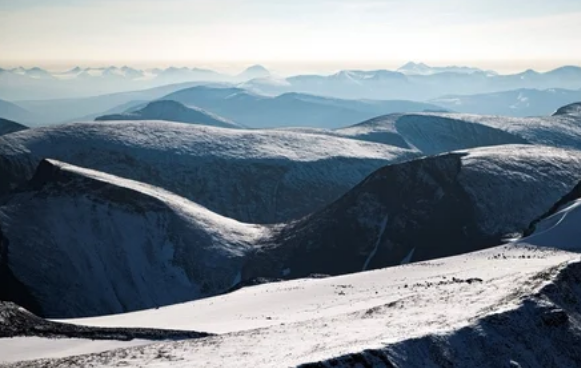
The European Union is preparing to revise its Arctic strategy as growing security concerns, changing energy needs and access to critical minerals push the remote northern region higher on Brussels’ agenda.
The Arctic, which remains dark for months each year and has a small population spread across a vast territory, was traditionally viewed as an area where countries could cooperate despite broader political disputes. That relationship has weakened in recent years as tensions between Russia and Western countries have intensified.
Dr Andreas Raspotnik, director of the Arctic Institute, told EU policymakers in Brussels that the region’s cooperative order had begun to fracture. Russia controls about 60% of the Arctic coastline and has sought to expand its economic and strategic influence there.
Security has become a major concern. NATO has increased its military presence in the region through its Arctic Sentry mission, a move Russia has described as a direct threat. The Kola Peninsula, close to Finland and Norway, also hosts a major part of Russia’s nuclear arsenal.
US President Donald Trump’s claims over Greenland have added another layer to discussions about the Arctic’s strategic importance.
The melting sea ice has also raised interest in the region’s natural resources. The US Geological Survey estimates that the Arctic could contain around 30% of the world’s undiscovered gas and 13% of undiscovered oil.
The EU has imposed a moratorium on Arctic oil and gas drilling because of environmental concerns. However, energy security has become more important following disruptions linked to Russia’s war in Ukraine and the US-Iran conflict.
Norway, Europe’s biggest gas supplier, has said it will continue Arctic drilling regardless of the EU’s position. International Energy Agency chief Fatih Birol has backed Norway’s role, describing the country as a reliable energy supplier.
Environmental organisations oppose expanded Arctic drilling, warning about oil spills and black carbon emissions. Researchers also question whether extracting resources from such a difficult environment would be commercially worthwhile.
Critical minerals are another source of interest. The Arctic is believed to contain deposits of minerals needed for batteries, electric vehicles, wind turbines and other clean technologies. Europe remains heavily dependent on China for rare earth supplies, creating pressure to develop alternative sources.
However, Arctic mining faces high costs, limited labour and long distances to markets. Indigenous communities and environmental concerns also remain central to the debate.
Shipping is another potential opportunity. More than 1,800 individual vessels travelled through the Arctic in 2025, a 40% increase in recent years. Russia is promoting the Northern Sea Route as a shorter connection between Europe and Asia, while China has begun regular container services.
Yet harsh conditions mean many ships require icebreaker support, much of which is provided by Russia. Sanctions and high operating costs could limit the route’s appeal.
Dr Svein Vigeland Rottem, an Arctic researcher, said the Northern Sea Route was unlikely to seriously challenge established shipping routes such as the Suez Canal in the foreseeable future.
