


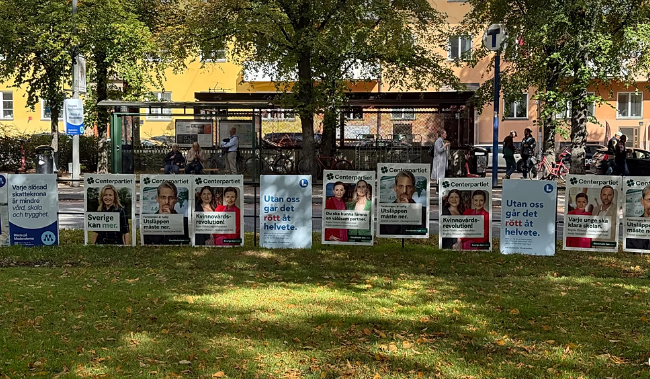
Sweden is increasing efforts to detect foreign attempts to influence political debate as the country prepares for its general election on September 13. Authorities are paying particular attention to social media platforms and the growing use of artificial intelligence to create and distribute political content.
The Swedish government said the current security environment, rapid technological development and lessons from elections elsewhere in Europe had highlighted the need to strengthen the country’s ability to resist foreign information influence.
The Swedish Psychological Defence Agency recently reported on a partly AI-powered network known as Holiday. The network consisted of about 1,200 fake accounts on X that produced more than 50,000 posts, comments and shares during 2025 and 2026. The activity was directed at Sweden and other countries as part of an influence campaign.
The first accounts were identified by Sweden’s central bank after its staff participated in an exercise organised by the agency. X later removed the network. Authorities have not connected Holiday directly to the upcoming election, but the report was released shortly before the vote to increase public awareness of similar tactics.
Social media is becoming an increasingly important source of political information, particularly among younger voters. An April report from Sweden’s Internet Foundation found that one in 10 Swedes uses AI services to ask questions about politics or social issues. Among first-time voters, the figure rises to one in four.
Matteo Magnani, a professor at Uppsala University who studies digital opinion formation, warned that recommendation algorithms can be manipulated to increase the visibility of political material. He said emotionally charged or extreme content may receive greater exposure because such posts often generate higher engagement.
AI tools can also make coordinated influence operations easier to expand by allowing large volumes of material to be produced across numerous accounts.
Swedish public radio reported in February that four TikTok accounts featuring AI-generated young women had been sharing far-right and anti-immigration material. Evidence suggested the accounts were controlled by the same actor.
Public concern over foreign interference remains significant. A recent poll by the Swedish Psychological Defence Agency found that 64% of adults believe foreign attempts to influence Sweden this year are either very or quite likely.
The Swedish Defence Research Agency has also observed an increase in election-related online activity, with posts rising from around 1,000 a day to almost 2,400 shortly before early voting began.
Researchers are monitoring coordinated posting, identical material and fake accounts, particularly around sensitive subjects such as migration. However, they have not attributed the observed activity to an organised foreign campaign.
Authorities say Russia and other actors have previously promoted narratives about migration, electoral fraud and Sweden being “Islamified”. Despite those concerns, Swedish officials currently do not regard the election as a major priority for Russian information influence.
Researchers say Sweden is better prepared than in previous elections to identify suspicious activity, but caution remains high as voters head to the polls.
