


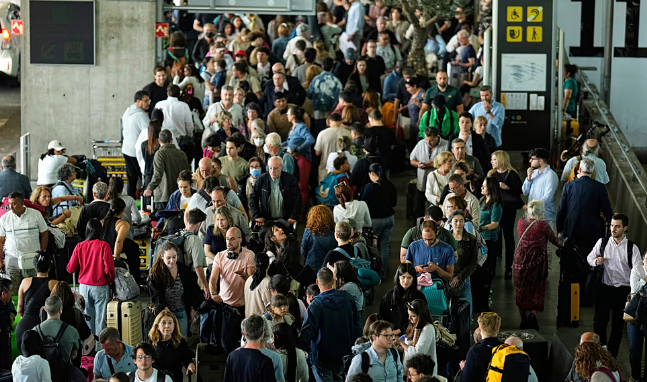
A new study commissioned by the European Federation for Transport and Environment (T&E) suggests that rising air tourism has contributed to higher housing costs across several European countries, with Spain among the most affected. Researchers, however, stressed that tourism alone does not explain the broader housing affordability crisis.
The report, prepared by the New Economics Foundation (NEF), examined trends in seven European countries between 2019 and 2025. It found a correlation between growing numbers of tourists arriving by air and increases in both residential property prices and rents, particularly in Spain, Portugal, Italy and Greece.
According to the analysis, Spain experienced a 12.8 percent rise in air tourist arrivals during the period. Researchers estimate that this increase contributed to an average rise of €3,800 in home purchase prices and an additional €236 in annual rental costs, equivalent to a 1.7 percent increase in rents. The study also projects that rents could climb by another €217 by 2031 if tourism growth continues at a similar pace.
The report noted that the impact varies widely depending on local conditions. Popular tourist destinations such as Barcelona, Madrid and coastal regions are likely to experience greater pressure than areas with lower visitor numbers. Researchers cautioned against applying national averages uniformly across different cities and regions.
The findings align with previous assessments by the Bank of Spain, which highlighted the growing number of homes being used for tourist accommodation, seasonal rentals and second homes. Around 400,000 properties are estimated to be allocated for these purposes, while foreign and domestic buyers purchase roughly 50,000 second homes each year.
Even so, the study emphasized that housing shortages, planning restrictions, administrative delays, labour shortages and complex regulations remain major drivers of rising property prices across Spain and other European markets.
The report also examined broader economic and environmental effects linked to tourism growth. It projects that Madrid-Barajas and Barcelona-El Prat airports could surpass Amsterdam’s Schiphol Airport in tourist arrivals over the coming years. Expansion plans at Barcelona’s airport have sparked debate because of concerns over their potential environmental impact on nearby protected wetlands.
Researchers found that Spain’s tourism intensity is among the highest in Europe. The Balearic Islands receive an estimated 9.2 tourists for every resident, while the Canary Islands welcome 4.9 tourists per resident. Catalonia records about two tourists per resident, compared with a European average of 0.9.
The study also highlighted aviation’s environmental impact, noting that Spain and Italy recorded aviation emissions in 2025 that exceeded pre-pandemic levels by 14 percent and 10 percent respectively.
On the economic side, researchers found that wages in Spain’s hospitality sector have not kept pace with the growth in tourism. Although hospitality accounted for around 10 percent of total hours worked in 2023, it generated only 5 percent of the country’s gross value added, pointing to relatively low productivity despite sustained growth in visitor numbers.
