


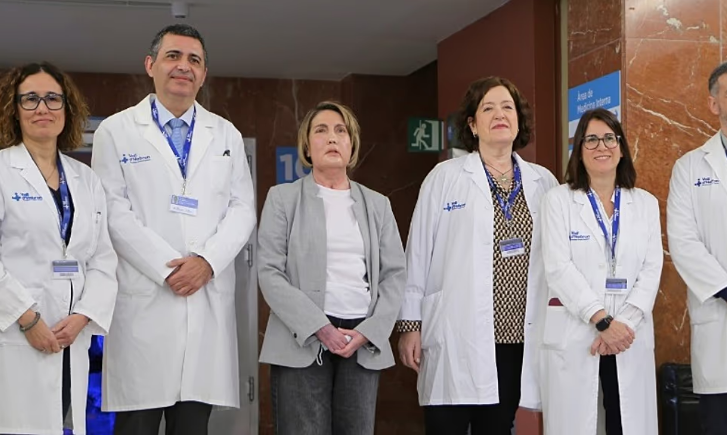
A hospital in Spain has achieved a medical milestone by performing the world’s first face transplant using tissues from a donor who had received medical assistance in dying, a procedure legal in Spain since 2021.
The operation, carried out at Vall d’Hebron University Hospital in Barcelona, addressed severe facial tissue damage in a patient whose condition had compromised essential functions such as breathing, eating, and speaking. The transplant allowed partial reconstruction of the patient’s face and marked the start of her functional recovery.
The donor had previously documented consent to donate organs and tissues following medically assisted death. This advance consent enabled the surgical team to prepare meticulously for the complex procedure, including the matching and preparation of facial tissues.
Dr Joan Pere Barret, head of Plastic Surgery and Burns at Vall d’Hebron, led a multidisciplinary team of approximately 100 health professionals, including surgeons, anesthesiologists, nurses, and specialists in microsurgery, immunology, and mental health.
“The procedure, performed by a team of around 100 health professionals, is a global medical milestone and opens new avenues for complex transplantation and reconstructive surgery,” Dr Barret said. He explained that surgeries of this nature require extensive preparation and lifelong follow-up care, as they involve transplanting skin, muscles, nerves, and bone structures, along with continuous immunosuppressive treatment to prevent tissue rejection.
The hospital highlighted that the operation adhered to strict ethical and legal protocols. It acknowledged the generosity of the donor and her family, emphasizing that their consent and collaboration were crucial to making the achievement possible.
Face transplants remain among the most challenging procedures in modern medicine. They demand precise surgical skill, careful immunological planning, and long-term rehabilitation to restore both function and appearance. Experts say the use of tissues from a donor after medically assisted death represents a significant step forward, potentially increasing the availability of complex tissues for transplantation while respecting patient autonomy and ethical standards.
Vall d’Hebron University Hospital has previously been involved in pioneering transplant and reconstructive procedures, and this latest achievement reinforces Spain’s role at the forefront of surgical innovation. Medical teams will now monitor the patient closely to assess recovery, tissue integration, and functionality.
Dr Barret noted that the procedure also highlights the importance of ethical frameworks in transplantation medicine. “This operation demonstrates how patient consent, careful planning, and multidisciplinary collaboration can push the boundaries of what is medically possible while upholding the highest ethical standards,” he said.
The breakthrough is expected to inform future cases of complex facial reconstruction and may influence international protocols for organ and tissue donation following medically assisted death.
