


Food prices across Europe rose by 2.8% in 2025 compared with the previous year, according to Eurostat data analysed by Euronews Business. Some products, however, experienced much higher inflation, with prices for certain items increasing by 10% or more.
Turkey emerged as a clear outlier, with food prices surging 32.8% last year, highlighting the country’s wider inflation challenges. The next-highest increase was far lower, at 7.6% in Kosovo. Within the European Union, Romania recorded the highest food inflation at 6.7%. Many countries in Eastern and Southeastern Europe, including Bulgaria, the Baltic states, and the Balkans, saw rates between 4% and 7%, well above the EU average.
Switzerland was the only European country to record a drop in food prices, down 1.1%, while prices remained unchanged in Cyprus. Among the EU’s “Big Four,” France saw the lowest rate at 0.7%, the third-lowest among 36 European countries. Germany and Spain recorded inflation of 2.1%, while Italy experienced the highest among major EU economies at 2.5%.
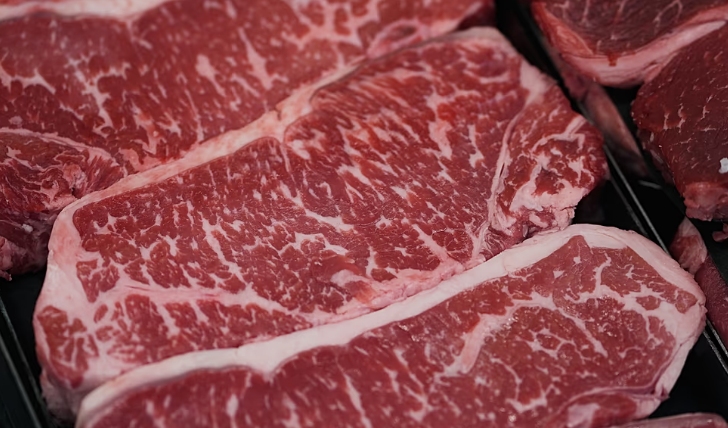
Eurostat tracked 64 common food items across Europe. Prices fell for eight products and remained stable for one, while the rest rose at varying rates. Chocolate prices increased the most, climbing 17.8%, followed by frozen fruit at 13%, and beef and veal at 10%.
Other notable increases included eggs, which rose 8.4%, butter at 8.3%, and lamb and goat at 7.2%. Sugar, jam, and honey went up 6.8%, fresh whole milk rose 5.7%, and root vegetables increased 5.5%. Fresh and chilled fruit rose 5.4%, while edible oils and preserved fruit each went up 4.7%. Poultry prices increased by 4.4%, and dried fruit and nuts rose 4.2%.
Some products, however, saw declines. Olive oil recorded the largest drop at 22.9%, reversing a trend of sharp price increases in recent years. Sugar fell by 11%, while oils and fats dropped 5.4% and potatoes fell 5.2%.
Food price trends also varied significantly across countries. Chocolate prices increased by more than 30% in Poland (33%), Lithuania (32%), and Estonia (32%), while Albania saw only a 1% rise. Frozen food inflation ranged from 2% in Iceland to 32% in Estonia. Beef and veal prices increased over 20% in the Netherlands, Croatia, and Latvia, compared with the EU average of 10%.
Egg price inflation exceeded 20% in five countries, including Kosovo at 30%, Czechia at 29%, Slovakia at 27%, Portugal at 21%, and Hungary at 20%. Butter prices reached double-digit inflation in 12 countries, surpassing 20% in both Kosovo and Sweden. For lamb and goat, the EU average increase was 7%, but six countries recorded rises above 10%, with Poland leading at 14%.
The data reveal that food inflation continues to affect European households unevenly, with the highest increases concentrated in Eastern Europe and specific products, while some items and countries saw prices decline.
