


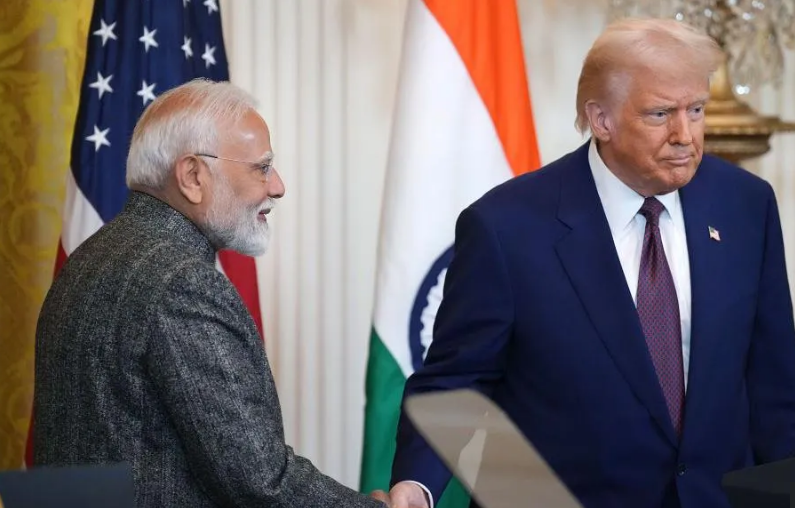
U.S. President Donald Trump has issued an executive order imposing an additional 25% tariff on Indian imports, escalating trade tensions over India’s continued purchases of Russian oil. The move raises the total tariff rate on Indian goods entering the U.S. to 50%, one of the highest rates currently in force.
The additional tariffs will take effect on August 27, unless India changes course on its oil trade with Moscow. The White House says the decision is part of a broader strategy to isolate Russia economically due to its war in Ukraine.
“The Russian Federation’s actions in Ukraine pose an ongoing threat to U.S. national security and foreign policy,” the White House said in a statement. “India’s imports of Russian oil undermine these efforts and necessitate stronger measures.”
India’s Ministry of External Affairs swiftly condemned the tariffs as “unfair, unjustified, and unreasonable,” reiterating that India’s energy purchases are guided by national interests. “It is extremely unfortunate that the U.S. should choose to impose additional tariffs on India for actions that several other countries are also taking,” the ministry said, adding that India “will take all actions necessary to protect its national interests.”
Trade Tensions Rise Despite Past Ties
The new tariffs threaten key Indian exports to the U.S., including textiles, gems, auto parts, and seafood—sectors that employ millions and contribute heavily to the country’s economy. Electronics and pharmaceutical products are so far exempt.
India’s reliance on Russian oil has surged over the past year. According to global data platform Kpler, Russia now supplies more than 35% of India’s crude oil, making it India’s top oil supplier. Trade figures show that India purchased about 1.75 million barrels of Russian oil daily during the first half of 2025.
The Federation of Indian Export Organisations called the U.S. move “extremely shocking,” warning that it will affect over 55% of India’s exports to the American market. The Delhi-based Global Trade Research Initiative (GTRI) estimates U.S.-bound Indian exports could drop by 40–50% as a result.
GTRI founder Ajay Srivastava advised caution: “India should remain calm, avoid retaliation for at least six months, and recognise that meaningful trade negotiations with the U.S. cannot proceed under threats or mistrust.”
Global Ramifications and Political Fallout
President Trump also hinted that more countries could face similar tariffs or secondary sanctions if they continue buying oil from Russia. “You’re going to see a lot more—so much secondary sanctions,” he told the BBC during a White House event on Wednesday.
This is not the first time the Trump administration has used secondary sanctions to pressure countries economically aligned with U.S. rivals. Similar tactics were applied to buyers of Venezuelan oil in previous years.
The move marks a sharp downturn in the once-friendly relationship between Trump and Indian Prime Minister Narendra Modi. Despite their past appearances at joint political events, the tariff escalation reflects deepening policy rifts between New Delhi and Washington.
With Friday’s broader deadline looming for potential new sanctions on Russia and 100% tariffs on other countries buying its oil, analysts say the latest move could be a harbinger of further global economic disruption.
