


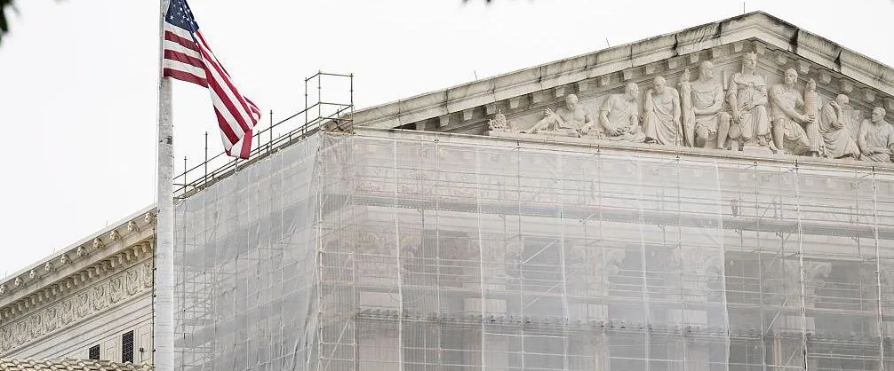
Former President Donald Trump has asked the US Supreme Court to reinstate a wide-ranging tariff program after a federal appeals court ruled that many of the duties were imposed illegally.
In an emergency petition filed late Wednesday, Trump’s legal team urged the justices to overturn a decision by the US Court of Appeals for the Federal Circuit, which last week ruled 7–4 that the tariffs exceeded presidential authority. The court determined that imposing levies on foreign imports is a constitutional power reserved for Congress.
At issue are tariffs Trump introduced under the International Emergency Economic Powers Act (IEEPA), a law that allows presidents to act against “unusual and extraordinary” threats. In April, Trump declared an economic emergency, arguing that persistent trade imbalances endangered US manufacturing and national security. His executive orders placed a baseline 10 percent tariff on imports from more than 90 countries, as well as additional “reciprocal” tariffs targeting Canada, Mexico and China.
The appellate court decision, while a significant setback for Trump, has been temporarily stayed to give the administration time to appeal. If the Supreme Court declines to take up the case, the ruling will take effect on October 14, potentially forcing the government to refund billions of dollars collected from businesses.
Solicitor General John Sauer, representing the Trump administration, warned in the petition that the stakes are “enormous.” He argued that the lower court’s decision “has disrupted highly impactful, sensitive, ongoing diplomatic trade negotiations, and cast a pall of legal uncertainty over the President’s efforts to protect our country by preventing an unprecedented economic and foreign policy crisis.”
The tariffs have been the cornerstone of Trump’s economic and foreign policy strategy, which he has defended as vital for protecting American industries. Supporters argue they provide leverage in negotiations with trade partners, particularly China, while critics say they have raised costs for businesses and consumers alike.
Small businesses have been among the most vocal opponents, with many filing lawsuits to challenge the tariffs. “These unlawful tariffs are inflicting serious harm on small businesses and jeopardizing their survival,” said Jeffrey Schwab of the Liberty Justice Center, which represents several plaintiffs. “We hope for a prompt resolution of this case for our clients.”
Earlier this year, the US Court of International Trade also ruled that the tariffs were unlawful, a decision that was put on hold pending appeals. While the recent ruling does not affect duties on steel and aluminum — which were imposed under a different statute — it strikes at the core of Trump’s broader trade agenda.
The Supreme Court now faces the choice of whether to intervene in a dispute that could reshape the limits of presidential power over economic policy.
