


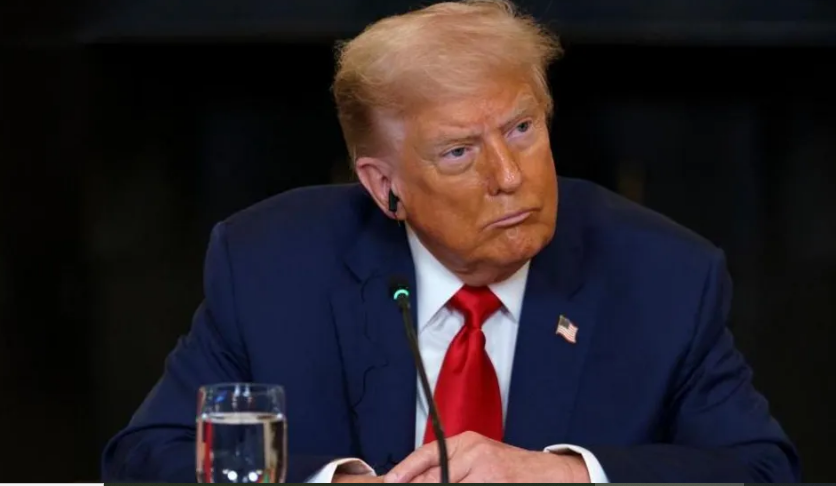
U.S. President Donald Trump has announced a sweeping 35% tariff on Canadian imports, set to take effect on August 1, escalating tensions between the two countries just days ahead of a self-imposed deadline to finalize a new bilateral trade agreement.
The announcement was made via a letter posted on Trump’s social media platform, Truth Social, in which he also warned of blanket tariffs ranging from 15% to 20% on more than 20 other trading partners. Trump said similar tariff notifications had been issued to the European Union and others, with implementation also set for August 1.
The new tariff on Canadian goods comes in addition to a series of existing levies already in place, including a 25% blanket tariff on certain Canadian products, as well as global duties on steel, aluminum, copper, and automobiles. Trump claimed these new measures were necessary to address ongoing trade imbalances and what he alleged was Canada’s failure to curb the flow of fentanyl into the United States.
“As you are aware, there will be no tariff if Canada, or companies within your country, decide to build or manufacture products within the United States,” Trump wrote, adding that the levies could be modified “upward or downward” depending on Canada’s actions.
Canadian Prime Minister Mark Carney responded to the announcement on social media platform X, saying his government would “stand firm in protecting Canadian workers and businesses” and would continue talks aimed at finalizing a new trade and security agreement with the U.S. by the July 21 deadline.
Carney also defended Canada’s efforts to combat the opioid crisis, noting new investments in border security and the recent appointment of a “fentanyl tsar.” U.S. Customs and Border Protection data, however, shows that only 0.2% of fentanyl seizures occur at the northern border, with the overwhelming majority coming through the U.S.-Mexico border.
The announcement has sent ripples through Canada’s key export sectors, particularly automotive manufacturing and metals. Roughly three-quarters of Canadian exports are bound for the U.S., making the country especially vulnerable to sweeping tariffs.
The tariffs have further complicated high-stakes negotiations between Ottawa and Washington. Canada has already implemented counter-tariffs on U.S. goods and warned of further retaliatory measures if a new deal is not reached by the deadline.
In an apparent concession during late June talks, Carney withdrew a controversial tax on large U.S. tech companies — a move he described as part of “a broader negotiation” strategy to keep trade talks on track.
With just over a week to reach a deal, uncertainty looms over one of the world’s most significant bilateral trade relationships, as businesses on both sides brace for potential economic fallout.
