


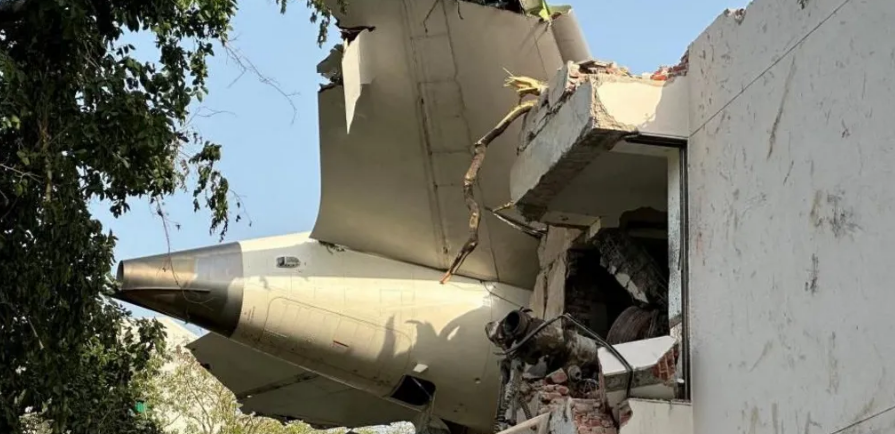
A preliminary investigation into the Air India crash that killed 260 people last month has revealed that both engines of the aircraft lost power shortly after take-off due to the fuel supply being cut off. The aircraft, a Boeing 787-8 Dreamliner, was en route from Ahmedabad to London when it went down less than a minute after departure on June 12.
India’s Aircraft Accident Investigation Bureau (AAIB) released initial findings indicating that both fuel control switches were moved from the “run” to “cut-off” position within a second after take-off — a sequence that led to a complete loss of engine thrust. The switches are typically only used to shut down engines after landing or in emergencies, not during take-off.
Cockpit voice recordings captured one of the pilots questioning the move, asking “Why did you cut off?” to which the other replied that he “did not do so.” The report does not clarify which of the two pilots — Captain Sumeet Sabharwal or First Officer Clive Kundar — made the remark.
Moments later, the switches were moved back to their normal position, automatically beginning the engine restart process. However, only one engine managed to regain thrust, and it was insufficient to prevent the aircraft’s descent. A Mayday call was issued just before the aircraft crashed into a residential building used as doctors’ accommodation, triggering a deadly explosion. A lone British national was the sole survivor.
The AAIB confirmed both pilots had received adequate rest prior to the flight, ruling out fatigue as a contributing factor. Earlier speculation of bird strike was also dismissed, with the report stating there was “no significant bird activity” near the plane’s path.
The report also referenced a 2019 advisory from the U.S. Federal Aviation Administration (FAA), which warned about improperly secured fuel control switches in some Boeing aircraft. While this advisory did not trigger mandatory action, it applies to the same switch design used in the crashed Air India aircraft. As the FAA bulletin was not legally binding, Air India did not inspect the switches.
An Air India spokesperson acknowledged the report and said the airline is cooperating fully with investigators. Boeing, in its response, said it is supporting both the investigation and Air India, while adhering to international aviation protocols.
The crash is a significant setback for Air India, which is undergoing a business revival under the Tata Group following its 2022 privatization. The airline has since cut some international wide-body operations amid ongoing disruptions related to the tragedy.
This incident marks the first fatal crash involving a Boeing 787-8 Dreamliner since the model entered commercial service in 2011. A full and final report is expected within 12 months.
