


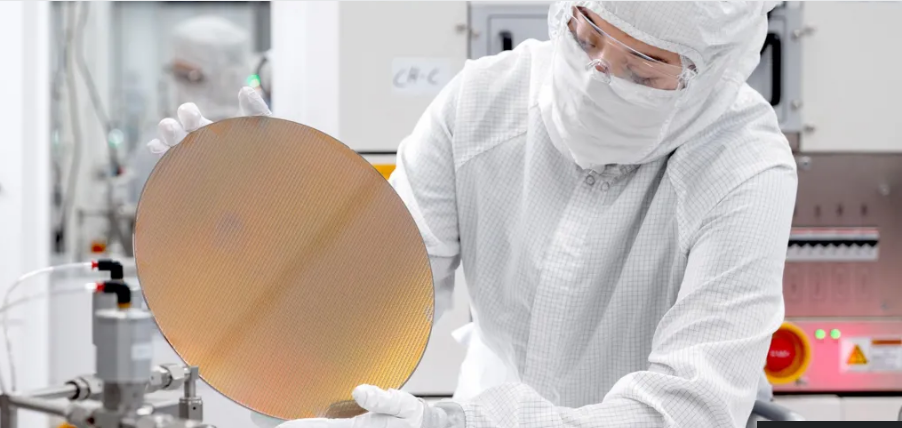
Semiconductor manufacturer Texas Instruments (TI) has announced plans to invest over $60 billion in expanding its U.S. operations, marking what it calls the largest investment in foundational semiconductor manufacturing in American history.
The Dallas-based firm said it will build or expand seven chip-making facilities across three locations in Texas and Utah. While no firm timeline has been disclosed, the expansion is expected to create around 60,000 jobs.
The announcement comes amid growing pressure from President Donald Trump, who has made increasing domestic chip production a key policy priority. “President Trump has made it a priority to increase semiconductor manufacturing in America,” said Commerce Secretary Howard Lutnick. “Our partnership with TI will support U.S. chip manufacturing for decades to come.”
Foundational chips—used in everything from smartphones to automobiles—are crucial to a wide range of industries. Unlike high-end artificial intelligence chips produced by firms like Nvidia, TI specializes in these general-purpose semiconductors, which are essential to supply chain stability.
TI’s decision follows a wave of similar announcements from other chipmakers. Just last week, Micron Technology said it would raise its planned U.S. investment to $200 billion. Industry analysts note that many such announcements include previously committed capital, but are being repackaged to align with the administration’s manufacturing agenda.
Some experts suggest that TI’s investment is also a strategic move to remain in the Trump administration’s favor. The president has repeatedly threatened to revoke the $52.7 billion CHIPS and Science Act, introduced by former President Joe Biden, unless tech firms ramp up their U.S. production. Trump has also hinted at new tariffs on imported semiconductors if domestic output does not meet expectations.
In December, the Biden administration had approved a $1.6 billion subsidy for Texas Instruments to support an earlier $18 billion plan to build three fabrication plants. That funding now forms part of the company’s broader investment total.
TI currently operates 15 manufacturing sites worldwide, including facilities in Asia. However, the company is facing rising competition from Chinese firms in the market for low-end chips—a factor likely influencing its decision to strengthen its U.S. footprint.
Major customers of TI include Apple, SpaceX, and Ford, all of which rely on a steady supply of foundational chips to power their products.
With global demand for semiconductors continuing to surge and geopolitical tensions complicating international supply chains, TI’s announcement signals a major step in reshoring chip production to the U.S.
