


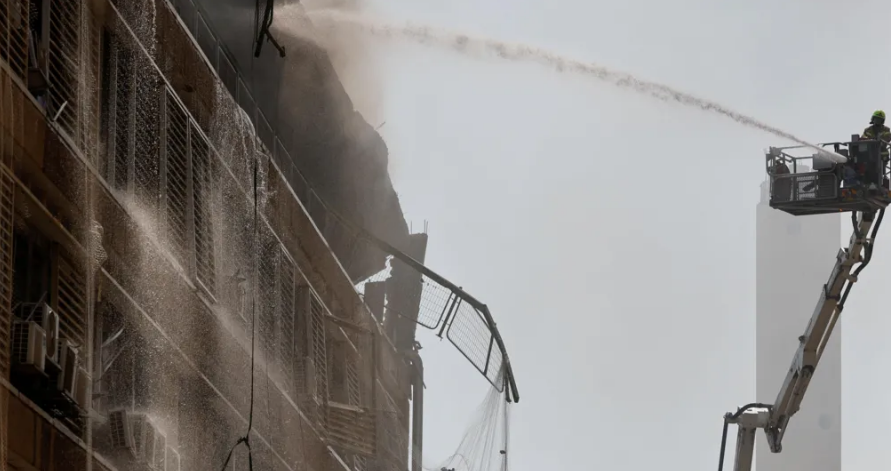
An Iranian missile struck a hospital in the southern Israeli city of Beersheba overnight, injuring at least 89 people, as the escalating conflict between Israel and Iran entered its seventh day. The Soroka Medical Center, the largest hospital in the Negev region, sustained significant damage in what Israeli officials called a “deliberate and criminal” attack.
Iran claimed the strike was aimed at a nearby military installation, not the hospital itself. However, the Israeli government swiftly condemned the incident, with Prime Minister Benjamin Netanyahu vowing retaliation. “Israel will exact the full price from the tyrants in Tehran,” Netanyahu wrote in a post on X (formerly Twitter).
Sharren Haskel, Israel’s Deputy Foreign Affairs Minister, called the missile strike on Soroka Medical Centre a “criminal act” and noted that the facility serves as the primary healthcare provider for much of southern Israel.
Correspondents on the ground reported extensive damage to the hospital and surrounding buildings, with debris still in the air hours after the explosion.
The strike came as Israel continued its own offensive on Iranian nuclear facilities, targeting sites at Natanz and the heavy-water reactor complex in Arak. While the Arak reactor is reportedly inactive and still under construction, it is capable of producing plutonium—a potential component for nuclear weapons.
Iranian media reported two projectiles landing near the Arak facility, but the International Atomic Energy Agency (IAEA) confirmed there had been no radiation leak. Israel also claimed to have hit infrastructure at Natanz used for developing nuclear weapon components, though Iran has maintained that its nuclear programme is solely for peaceful purposes.
Israel has accused Tehran of moving closer to weaponising its uranium stockpile, an allegation Iran firmly denies.
In a statement, Iran’s armed forces declared that their response to Israeli aggression “will have no limits.” Iranian officials also lodged a formal complaint with the IAEA, accusing Israel of violating international laws that prohibit attacks on nuclear facilities.
Meanwhile, tensions are rising around the prospect of U.S. involvement. President Donald Trump has approved contingency plans for potential strikes on Iran but has yet to make a final decision. “I may do it, I may not do it,” Trump said when asked about possible American intervention.
Iran’s Supreme Leader Ayatollah Ali Khamenei rejected any suggestion of surrender and warned Washington against military involvement. Deputy Foreign Minister Kazem Gharibabadi stated that Iran would “use its tools to teach aggressors a lesson” if the U.S. joins Israel’s campaign.
The situation remains volatile, with both regional and global powers watching closely as the threat of further escalation looms.
