


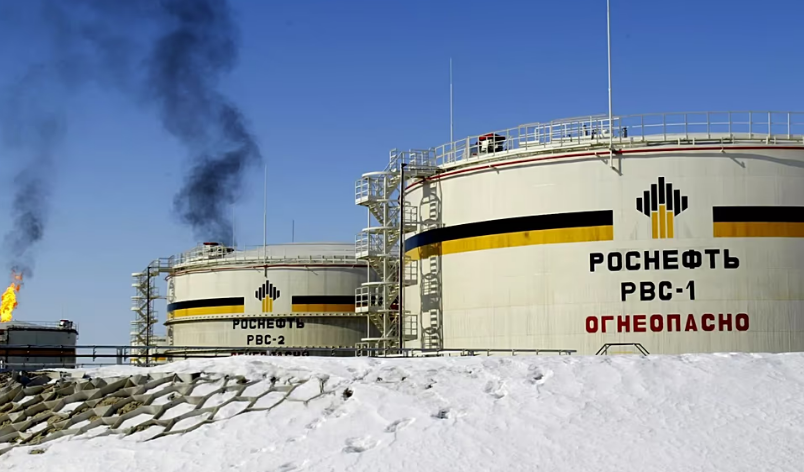
Oil prices soared on Thursday after the United States announced sweeping new sanctions against Russia’s two largest oil producers, Rosneft and Lukoil, in a move aimed at tightening pressure on Moscow’s energy revenues amid its ongoing war in Ukraine.
Brent crude, the global benchmark, jumped 5.24% to about $65.87 per barrel by midday, extending a 2% rise from the previous day. West Texas Intermediate (WTI) crude climbed 5.68% to $61.82, reflecting mounting fears of supply disruptions in global oil markets.
The US Treasury’s Office of Foreign Assets Control (OFAC) confirmed that the sanctions freeze all American-held assets of Rosneft and Lukoil and prohibit US companies and citizens from conducting business with them. The measures also warned of potential “secondary sanctions” for non-US entities that engage in transactions with the blacklisted firms — a move that could further complicate international oil trade.
“The United States is taking additional action in response to Russia’s continued refusal to engage seriously in peace negotiations to end the war in Ukraine,” the Treasury Department said in a statement. “These measures are designed to degrade the Kremlin’s ability to generate revenue for its war machine and sustain its weakened economy.”
Russia is one of the world’s top crude exporters, and any disruption in its output or sales reverberates across global seaborne oil markets. Brent, derived from the North Sea, serves as the international price benchmark — meaning that restrictions on Russian oil can quickly tighten global supply and drive prices upward.
The European Union also stepped up its measures on Thursday, unveiling a new sanctions package that bans imports of Russian liquefied natural gas (LNG) starting in 2027. The bloc additionally imposed a transaction ban on Rosneft and Gazpromneft, deepening coordination with Washington’s efforts to curb Moscow’s energy revenues.
The new restrictions could reshape global trade flows, particularly for countries heavily reliant on Russian crude. India — which became the largest buyer of discounted Russian oil since the invasion of Ukraine — may reduce its imports due to the heightened sanctions risk. India has purchased around 1.7 million barrels per day of Russian crude between January and September this year.
Analysts warned that even before physical oil flows shift, the legal and financial uncertainty surrounding Russian exports will lift prices. Banks, insurers, and shipping firms that handle Russian cargoes now face greater exposure to penalties, making it harder to move oil through conventional Western-linked channels.
As more Russian barrels become stranded or rerouted via longer, costlier journeys, the global supply of easily tradeable crude tightens — prompting traders to factor in a growing geopolitical risk premium.
