


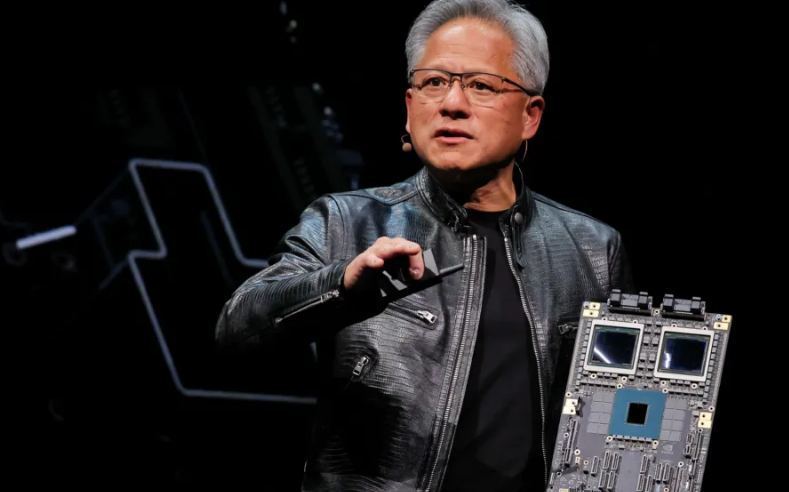
Two of the world’s biggest chipmakers, Nvidia and AMD, have agreed to pay the U.S. government 15% of revenues from certain product sales in China in a move described as “unprecedented” by industry analysts. The arrangement will allow both companies to resume exports of specific high-performance chips to the Chinese market, following months of restrictions tied to national security concerns.
According to sources cited by the BBC, the agreement covers Nvidia’s H20 chip and AMD’s MI308 chip — both developed for China after earlier U.S. export controls were imposed in 2023. Under the deal, the U.S. government will issue export licences for the chips in exchange for the 15% revenue share.
Sales of Nvidia’s H20 chip were effectively halted in April after the Trump administration tightened export rules introduced under President Joe Biden. Security experts have warned the H20 could boost China’s artificial intelligence capabilities, potentially aiding military applications. A letter from 20 former officials and analysts to U.S. Commerce Secretary Howard Lutnick last month cautioned that such chips could be used in autonomous weapons, surveillance systems, and military decision-making platforms.
Nvidia Chief Executive Jensen Huang has spent months lobbying for a resumption of sales, reportedly meeting President Trump last week. In a statement, Nvidia said it complies with all U.S. rules, adding, “We hope export control policies will allow America to compete globally.” AMD did not immediately comment on the deal.
While the White House declined to respond, Beijing has condemned Washington’s approach, accusing the U.S. of “abusing export control measures” and engaging in “unilateral bullying.”
Industry analysts say the revenue-sharing agreement highlights the mounting costs of doing business in China amid a volatile trade relationship between the world’s two largest economies. “This creates substantial financial pressure and strategic uncertainty for tech vendors,” said Charlie Dai of research firm Forrester.
The deal comes against a backdrop of tentative easing in U.S.-China trade tensions. Both sides have recently lifted certain restrictions, and in May agreed to a 90-day pause in their tariff dispute. However, with the truce due to expire on August 12, the future of broader trade relations remains unclear.
In the U.S., the Trump administration has been pushing major technology companies to expand domestic investment. Apple, Micron, and Nvidia have all announced multi-billion-dollar U.S. projects in recent months. Meanwhile, Intel’s chief executive is expected to meet Trump after the president questioned his ties to China — an allegation the executive has denied.
The Nvidia and AMD agreement marks a rare compromise in the high-stakes technology rivalry, but experts warn it does little to resolve the underlying security concerns that triggered the export bans in the first place.
