


Business activity across the eurozone weakened sharply in May, falling to its lowest level in more than two and a half years as the economic fallout from the war in the Middle East deepened pressure on Europe’s private sector.
Fresh data from the S&P Global flash purchasing managers’ index (PMI), a closely watched indicator of economic momentum, showed the eurozone composite output index dropping to 47.5 in May from 48.8 in April. A reading below 50 signals contraction, marking the second consecutive month of decline and the steepest drop since late 2023.
Chris Williamson, chief business economist at S&P Global Market Intelligence, said the region was “taking an increasingly severe toll from the war in the Middle East,” noting that output contraction had accelerated at its fastest pace in over two years.
The services sector, which dominates eurozone economic activity, saw the sharpest deterioration. The services PMI fell to 46.4, its weakest level since early 2021, as higher energy costs linked to geopolitical tensions weighed heavily on household spending and corporate demand.
Manufacturing offered limited relief, holding just above stagnation at 51.4, though new orders slipped for the first time in several months, signalling fading resilience in the industrial sector.
France recorded the steepest downturn among major economies. Its composite PMI plunged to 43.5 from 47.6, reflecting a severe contraction across both manufacturing and services. Services activity dropped to its lowest level in more than five years, while factory output reversed gains made in the previous month.
Joe Hayes, principal economist at S&P Global Market Intelligence, said rising energy costs linked to global oil disruptions were driving inflationary pressures and weakening demand. He warned that falling new orders suggested “recession risks have materially increased for the eurozone’s second-largest economy.”
Business confidence in France also deteriorated sharply, with firms turning pessimistic about the year ahead for the first time since late 2024.
Germany, Europe’s largest economy, also showed signs of strain. The composite PMI edged up slightly to 48.6 but remained in contraction territory. Manufacturing output nearly stalled, while new orders declined again. Employment fell at its fastest pace in more than 18 months, driven by layoffs in industry.
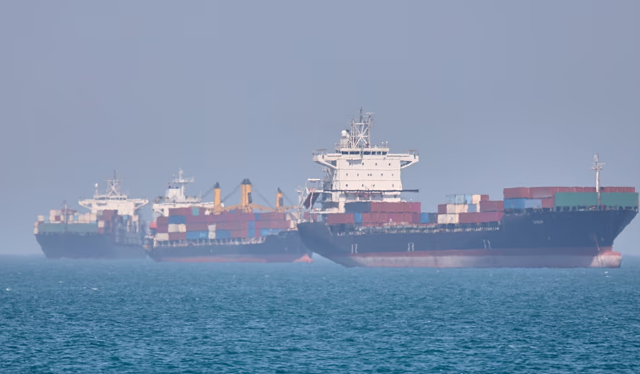
Inflation pressures intensified across the region. Input cost inflation rose for a seventh consecutive month to a three-and-a-half-year high, while prices charged for goods and services increased at their fastest pace in over three years. Analysts linked the surge to energy disruptions tied to the closure of key shipping routes, including the Strait of Hormuz.
The European Central Bank now faces mounting pressure as growth weakens while inflation accelerates. Markets are increasingly betting on further interest rate hikes, even as economic indicators point to a deepening slowdown.
Two months after showing steady expansion, the eurozone economy is now confronting rising recession risks as geopolitical shocks ripple through energy markets, supply chains and consumer demand.
