


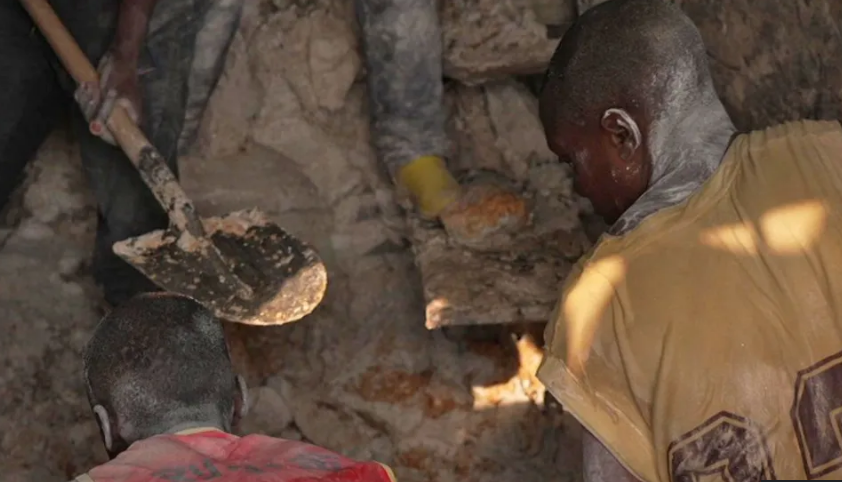
In a rare glimpse inside a rebel-held mining operation, the M23 armed group recently allowed journalists from the BBC limited access to the Rubaya mining site in the eastern Democratic Republic of Congo (DRC) — a vast coltan-rich area essential to the production of mobile phones and other electronics.
The sprawling mine, located in the Masisi Hills of North Kivu province, produces around 15% of the world’s coltan supply. Despite the risk and tough conditions, more than 10,000 people reportedly work at the site daily. They extract the valuable ore using basic tools in difficult and often dangerous conditions.
“When we are deep in the mines, temperatures are very high and there can be harmful gases,” miner Peter Osiasi said. “But mining has helped me. I’ve been able to save, marry, and support my family.”
Since April last year, the M23 has controlled Rubaya, asserting authority over operations while charging fees and taxes. The group has reportedly earned hundreds of thousands of dollars monthly from this mining activity — revenues that, according to a UN report, are funneled in part to Rwanda, an allegation both M23 and the Rwandan government deny.
The visit came shortly after DR Congo and Rwanda signed a US-brokered ceasefire deal in Washington on June 27, aimed at ending decades of conflict in the region. While both governments pledged to disengage proxy groups, the M23 — a primarily Tutsi-led force — was not a signatory. It continues to dominate large areas of eastern DRC, including key cities and infrastructure.
Despite political tensions, global interest in DR Congo’s minerals is growing. U.S. President Donald Trump, ahead of the recent agreement, hinted that American companies were poised to secure mineral rights in the country — potentially challenging China’s current dominance in the sector.
Rubaya’s M23-appointed supervisor, Patrice Musafiri, welcomed potential foreign investment but insisted it must benefit local communities. “Any investor must bring development — jobs, schools, hospitals — and increase wages for the miners,” he said.
Although the M23 says it has improved safety and organisation at the site, miners continue to earn meagre wages and face harsh conditions. “The pay is very low, even if things are peaceful,” Osiasi noted.
With a parallel peace mediation effort led by Qatar ongoing, the future of mining governance in eastern DRC remains uncertain. As negotiations play out, many locals are simply hoping for long-term peace and better livelihoods.
“My appeal is for peace and better pay,” Osiasi said, before returning to the mine.
