


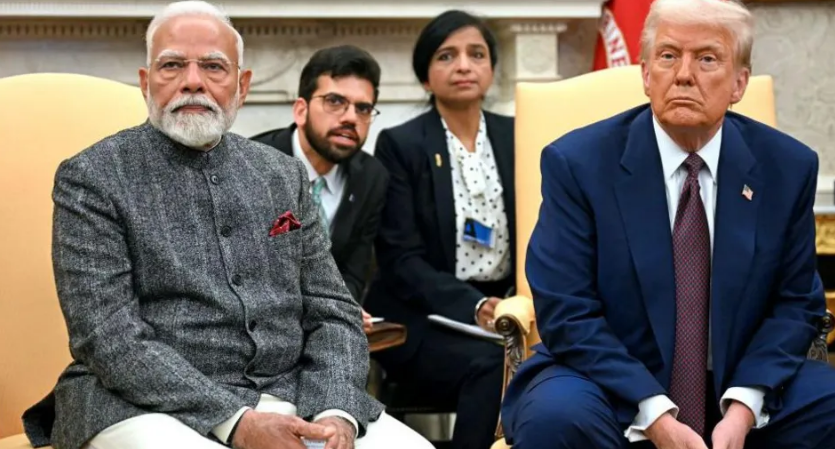
With just days left before a self-imposed 9 July deadline, the much-anticipated India-US trade deal appears to be teetering on the edge, despite optimism from both sides. Talks continue in Washington as negotiators attempt to resolve key sticking points, especially around agricultural access, auto components, and tariffs on Indian steel.
While US President Donald Trump has spoken confidently about a “big, beautiful” trade agreement, and Indian Finance Minister Nirmala Sitharaman echoed similar optimism, the reality inside negotiation rooms remains far more complex. Indian officials have extended their stay in Washington, but sources suggest the two countries are still far from reaching a comprehensive agreement.
One of the most significant points of contention is access to India’s agricultural market. The US is pushing for greater entry for products like corn, soybeans, cotton, and dairy, hoping to reduce its $45 billion trade deficit with India. However, India has long resisted liberalising this sector, citing concerns over food security and the livelihoods of its 700 million-strong rural population.
“There are red lines Delhi cannot cross,” said Ajay Srivastava, founder of the Delhi-based Global Trade Research Initiative. “No tariff cuts are expected for dairy or key food grains, which are politically and economically sensitive.”
American concerns also extend to India’s increasing number of non-tariff barriers, including over 700 “Quality Control Orders” (QCOs) that critics argue are stifling imports under the guise of improving standards. These regulations are part of India’s broader “self-reliance” agenda but have drawn criticism from both the US government and Indian think tanks for raising compliance costs and restricting market access.
While Indian exports to the US mainly include rice, shrimp, and spices, American interests now focus on expanding their share of India’s farm imports. A recent policy paper from Niti Aayog controversially suggested lowering tariffs on a range of US agricultural goods, though it remains unclear whether this reflects official policy.
Given the political sensitivities and economic complexities, analysts believe the most realistic outcome is a scaled-down “mini-deal,” similar to the limited trade agreement the US signed with the UK in May. This would involve modest tariff reductions on industrial goods, limited agricultural quotas, and broader commercial commitments.
Washington may also push for large-scale Indian purchases in areas like energy, aviation, and defence, and seek looser foreign investment rules in sectors such as retail and re-manufactured goods.
Even if a partial deal is reached, major issues like digital regulation, intellectual property rights, and services trade will likely remain unresolved for future negotiations.
Though failure is still a possibility, experts say it is unlikely that Trump would reimpose high tariffs on Indian goods. “Still,” said Srivastava, “with Trump, surprises can’t be ruled out.”
