


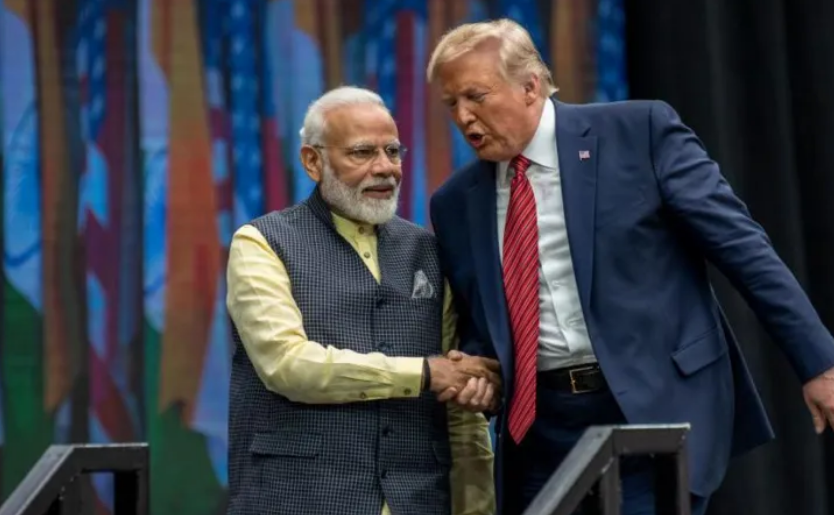
India has pushed back against claims by US Commerce Secretary Howard Lutnick that a bilateral trade deal stalled because Prime Minister Narendra Modi did not call former President Donald Trump.
In a podcast released Friday, Lutnick said the deal “was all set up” but ran into trouble when Modi did not make a phone call to Trump. He described Trump’s approach to negotiations as a “staircase,” where early agreements secured the best terms. Lutnick added that the US had given India “three Fridays” to close the deal and that when Delhi later expressed readiness, “the train had left the station.”
The White House has not commented on Lutnick’s assertions. India, however, said the description of discussions with Washington was “not accurate.” Foreign Ministry spokesperson Randhir Jaiswal said that both countries had been committed to negotiating a trade agreement since February last year and had conducted multiple rounds of discussions to reach a “balanced and mutually beneficial” deal.
Jaiswal added that Modi and Trump spoke eight times last year, discussing various aspects of the bilateral relationship. The government reiterated that negotiations have come close to an agreement on several occasions.
The terms of the deal remain unclear. Agriculture has been a key point of contention, with the US seeking greater access to India’s farm sector, while Delhi has maintained strong protections. In December, United States Trade Representative Jamieson Greer described India as a “tough nut to crack” and said Washington had received its “best ever offer” from Delhi.
The trade dispute intensified after Trump imposed 50% tariffs on Indian goods in August, partly as a penalty for India’s continued purchases of Russian oil. India defended its energy imports, citing the need to meet domestic demand, although refiners have since reduced purchases from Moscow. Despite the tariffs, India’s exports to the US rose more than 22% in November compared with the previous year.
The tariffs and the related rhetoric have strained ties between the two countries. Modi had been among the first world leaders to visit the White House after Trump took office, but the relationship has cooled since then. Delhi has repeatedly rejected Trump’s claims of mediating between India and Pakistan, maintaining that it would not accept third-party intervention in Kashmir.
Lutnick said India was the second country to enter trade negotiations with the US after the UK, and that Washington has since concluded agreements with other nations, including Indonesia and Vietnam. US Senator Lindsey Graham recently said Trump had “greenlit” a sanctions bill that could increase tariffs on countries doing business with Moscow, a development India says it is monitoring closely.
Despite the ongoing disagreements, both India and the US continue to engage in discussions aimed at reaching a trade deal, although no timeline has been confirmed.
