


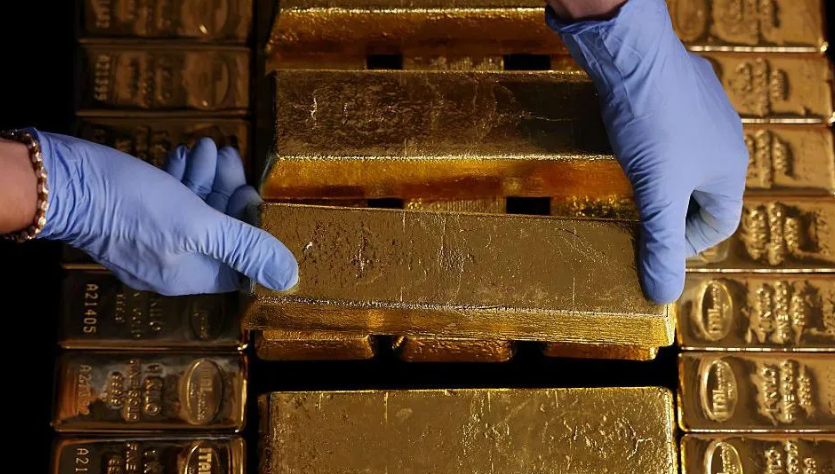
The global gold market has surged to unprecedented levels, with prices breaching the $4,000 (£2,985) per ounce mark for the first time in history. The rally reflects investors’ growing preference for safe-haven assets amid escalating economic and political uncertainty worldwide.
Spot gold climbed to over $4,036 an ounce on Wednesday afternoon in Asian trading, marking the precious metal’s strongest performance since the 1970s. Futures contracts for gold, which indicate market sentiment for future prices, also reached similar highs on October 7.
Analysts attribute the sharp rise to several intertwined factors, including trade tensions, a weakening US dollar, and an ongoing government shutdown in Washington that has entered its second week. The shutdown, triggered by a deadlock over public spending, has delayed key economic data releases, heightening anxiety among investors.
Christopher Wong, a rates strategist at OCBC Bank in Singapore, said the shutdown had acted as a “tailwind for gold prices,” pushing more investors toward traditionally stable assets. Historical patterns show similar behaviour during previous shutdowns, with gold prices climbing nearly 4% during the month-long political impasse in President Trump’s earlier term.
The rally has also been fuelled by robust central bank demand. Data from the World Gold Council shows that central banks have collectively purchased over 1,000 tonnes of gold annually since 2022—more than double the average between 2010 and 2021. Nations such as Poland, Turkey, India, Azerbaijan and China have been among the leading buyers, viewing gold as a strategic diversification away from US treasuries and dollar dependence.
Meanwhile, retail investors have joined the rush. Precious metals dealer Silver Bullion reported a doubling of its customer base over the past year. Its founder, Gregor Gregersen, said banks, high-net-worth families, and individual investors alike are increasingly turning to gold as a safeguard against economic instability. “Most of our clients are long-term holders,” Gregersen noted, predicting that gold’s upward trend could continue for at least five years.
However, analysts caution that the rally may not be indefinite. OCBC’s Wong warned that an early resolution to the US shutdown or a sudden rise in interest rates could temper prices. Similarly, UOB’s head of market strategy, Heng Koon How, highlighted that gold’s strength relies partly on expectations that the US Federal Reserve will lower interest rates.
With US President Donald Trump intensifying criticism of the Fed for not cutting rates fast enough, investor confidence in the central bank’s stability has come under strain. As markets navigate this volatile environment, gold’s reputation as a hedge against uncertainty appears stronger than ever.
