


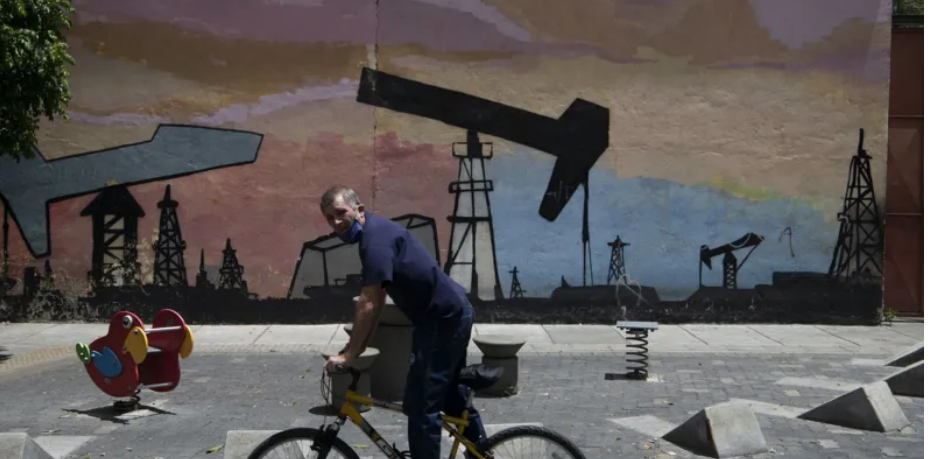
US President Donald Trump has vowed to tap Venezuela’s vast oil reserves following the capture of President Nicolás Maduro, claiming the United States will “run” the country until a safe transition is secured. He has encouraged American oil companies to invest billions of dollars to repair Venezuela’s struggling oil infrastructure and increase production.
Venezuela holds the world’s largest proven oil reserves, estimated at 303 billion barrels, but current output remains low. In November 2025, the country produced just 860,000 barrels per day, less than a third of its output a decade ago and under 1% of global consumption. Years of underinvestment, mismanagement, and sanctions have left the oil industry weakened, with complex infrastructure in poor condition and many experienced workers having left the country.
“The real challenge they’ve got is their infrastructure,” said Callum Macpherson, head of commodities at Investec. Bill Farren Price, a senior fellow at the Oxford Institute for Energy Studies, added that Venezuela’s oil sector “had its heyday decades ago” and warned that restoring production would require significant investment over a long period.
Venezuelan reserves consist mainly of heavy, sour crude, which is more difficult and costly to refine than the light, sweet oil typically produced in the US. Legal and political hurdles also remain a major obstacle. Homayoun Falakshahi, a senior commodity analyst at Kpler, said any company looking to exploit Venezuelan reserves would need formal agreements with a new government, which cannot happen until Maduro’s successor is in place.
Even with a stable administration, investment in Venezuela would be a long-term gamble. Analysts estimate it could take tens of billions of dollars and up to a decade to restore production to meaningful levels. Former BP chief Lord Browne described the effort as a “very long-term project,” noting that coordinating personnel, equipment, and resources will take considerable time.
Neil Shearing, chief economist at Capital Economics, warned that Trump’s plan would have little immediate impact on global oil supply or prices. “The issue has always been decades of underinvestment and mismanagement. It is really expensive to extract,” he said, adding that even if production returned to around three million barrels per day, Venezuela would remain outside the world’s top 10 producers. Shearing also highlighted that OPEC+ countries are currently producing at high levels, meaning the world is not facing a shortage of oil.
Chevron is the only US company currently operating in Venezuela, accounting for roughly one-fifth of production under a 2022 licence from the Biden administration. Other major firms have not publicly commented, though Falakshahi suggested internal discussions are likely, as the potential prize could outweigh the risks. Companies such as ExxonMobil and ConocoPhillips still seek compensation for past expropriations, highlighting the sector’s complex history.
Lord Browne noted that despite the risks, global oil companies may still see Venezuela as an opportunity. “Having options for business in different parts of the world is a good thing,” he said, warning that ramping up output will take years and may even temporarily reduce production as the industry reorganises.
