


Thirty-four years after the École Polytechnique massacre in Montreal, which claimed the lives of 14 women, Canada is confronting renewed challenges in controlling assault-style firearms. The federal government rolled out a ban on some 2,500 models of these weapons following a deadly mass shooting in Nova Scotia in 2020, but efforts to buy back prohibited guns have encountered resistance from gun owners, provincial authorities, and even law enforcement.
Heidi Rathjen, a long-time gun control advocate who has campaigned for a ban since the 1989 Montreal tragedy, described the federal scheme as “flawed” and insufficient. “Without a comprehensive ban on assault weapons, there is no ban… and the money will be wasted,” she said. The buy-back programme allows gun owners to surrender firearms in exchange for government compensation, with over C$215 million allocated. More than 67,000 firearms have been voluntarily declared by 37,000 Canadians, but the government had initially aimed for 136,000 guns.
Resistance has emerged in western provinces. Alberta has refused to enforce the programme, while Saskatchewan will shield owners from criminal liability until guaranteed fair compensation is provided. Blaine Beaven, Saskatchewan’s firearms commissioner, criticized the ban, calling it “an ideological mandate” with limited impact on public safety. Several police forces across Canada have also refused to assist, citing operational burdens and prioritization of illegal gun enforcement.
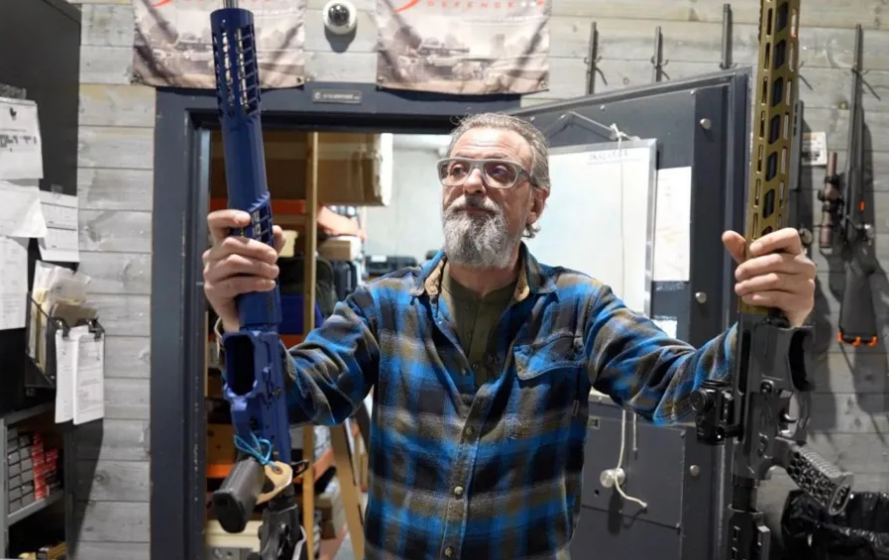
Gun shop owners report confusion among lawful owners over which firearms are affected. Frank Nardi, who operates a shop in Montreal, pointed out inconsistencies in the ban, showing two rifles with nearly identical specifications, only one of which is prohibited. He argued that mass shootings are more often linked to gaps in mental health systems than the presence of legal firearms.
Despite setbacks, the federal government has pledged to continue the programme. Public safety minister Gary Anandasangaree acknowledged earlier criticisms of the plan but reiterated its importance, thanking Canadians who have turned in weapons and affirming that assault-style firearms “do not belong in our communities.” The amnesty deadline, previously extended multiple times, is now set for 30 October, though legal challenges could alter the timeline.
Canada’s gun control framework remains stringent compared with the United States, requiring licences, safety courses, and background checks. Yet illegal firearms, often smuggled from the U.S., continue to fuel gun crime. Recent mass shootings have frequently involved unregistered long guns or modified rifles, including the February attack in Tumbler Ridge, British Columbia, which killed eight people, including children.
Experts note that while the buy-back programme is modeled on successful efforts in Australia and New Zealand, Canada’s implementation has been fragmented. Joel Negin, a public health professor at the University of Sydney, stressed that the effectiveness of such programmes depends on swift, well-coordinated action linked to broader gun control measures.
For Rathjen, the urgency remains. She warns that without a truly comprehensive ban covering all assault-style rifles, including the SKS semi-automatic, Canada risks failing to prevent further tragedies. “The government has invested so much in this controversial file, yet they’re heading for failure,” she said, underscoring the continuing national debate over firearms regulation.
