


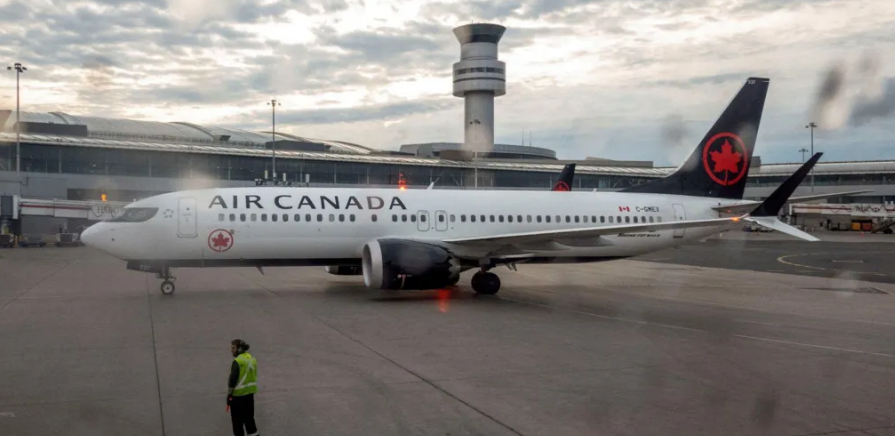
Air Canada will begin suspending flights on Thursday after the union representing its flight attendants issued a 72-hour strike notice, marking a major escalation in a contract dispute that threatens to disrupt peak summer travel for tens of thousands of passengers.
The Canadian Union of Public Employees (CUPE), which represents 10,000 flight attendants at the airline, served the notice early Wednesday, citing stalled negotiations over wages and unpaid work. The move came after more than eight months of talks failed to yield an agreement.
Air Canada responded by issuing its own 72-hour lockout notice, saying the union’s latest counteroffer sought “exorbitant increases.” The carrier added that CUPE had rejected an offer to enter binding third-party arbitration. The strike is scheduled to begin at 1:00 a.m. EST (05:00 GMT) on Saturday.
To prepare for a possible work stoppage, the Montreal-based airline said it would start cancelling flights on Thursday, followed by more cancellations on Friday, ahead of what it described as a “complete cessation of flying” on Saturday. The disruption could affect as many as 130,000 daily customers, including 25,000 within Canada, across its network of 64 countries and 259 aircraft.
Air Canada Express flights, which handle about 20% of the airline’s daily passengers, will not be impacted. Passengers whose flights are cancelled will receive full refunds and may be rebooked on other Canadian or foreign carriers, although the company warned that alternative options may be limited or delayed.
Toronto’s Pearson International Airport, Canada’s busiest, said it is monitoring the situation closely and urged travellers to confirm flight details directly with Air Canada. Vancouver International Airport and other hubs have begun implementing contingency plans.
At the heart of the dispute are compensation and working conditions. Air Canada said it has offered a 38% increase in total compensation over four years, including a 25% pay rise in the first year. CUPE countered that the proposal is “below inflation, below market value, below minimum wage” and fails to address unpaid work, such as time spent boarding passengers or waiting at airports before flights.
Union leaders accused the airline of avoiding genuine negotiations, pointing to its request for government-directed arbitration. “When we stood strong together, Air Canada didn’t come to the table in good faith,” CUPE said in a statement to members.
Earlier this month, 99.7% of union members voted in favour of strike action. With no sign of a breakthrough, Canada’s largest airline faces one of its most significant labour disruptions in years — one that could leave travellers grounded at the height of the summer holiday season.
