


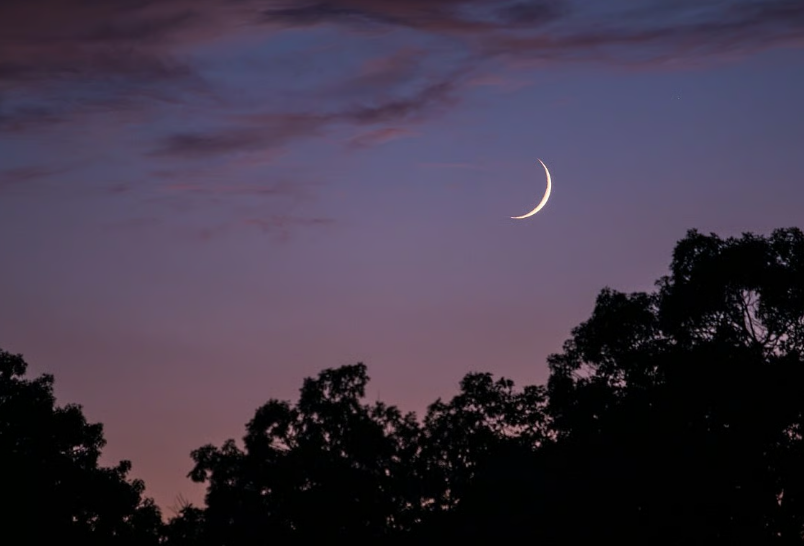
Several countries, including India, Pakistan, Bangladesh, Iran, Morocco and Mauritania, are preparing to search for the Ramadan crescent on Wednesday, February 18, as Tuesday marks only the 28th day of Shaban in those nations. Because Islamic months last either 29 or 30 days depending on the sighting of the new moon, crescent observation efforts cannot take place until the 29th day of the month.
The start of Ramadan is determined by the appearance of the thin crescent moon shortly after sunset. Sighting the moon to mark the beginning of a new Islamic month is a confirmed Sunnah, rooted in the teachings of the Prophet Muhammad (peace be upon him). Scholars stress that the practice is not symbolic but a communal act of worship involving direct observation.
According to information shared by the Astronomy Centre, sunset timings this week present a particular challenge. In several parts of the world where Tuesday corresponds to the 29th of Shaban, the moon is expected to set at nearly the same time as the sun. Astronomers typically calculate moonset based on the upper edge of the lunar disk. This month, however, since the moon sets alongside the sun in many cities, calculations must focus on the lower edge of the disk, as any potential crescent would appear along that portion.
The astronomical data table circulated by the centre includes only countries observing the 29th of Shaban on Tuesday. Nations where the day falls on the 28th, including Pakistan, Bangladesh, Iran, Morocco and Mauritania, were excluded because they will conduct their sighting a day later.
Mohammed Shawkat Odah, director of the International Astronomical Union, has previously explained that scientific calculations are intended to support traditional sighting practices, not replace them. Modern astronomy provides data on conjunction times, moon altitude and visibility conditions to help guide observers and assess whether a sighting is possible.
Differences in methodology explain why the start of Ramadan can vary across the Muslim world. Some countries rely strictly on local physical sighting, known as ru’yah, where observers report confirmed sightings to religious authorities who then issue official announcements. Others depend primarily on astronomical calculations, particularly in regions where visibility is difficult.
A standard method is also followed in certain cases, where communities adopt the calendar or moon sighting decision of another country with an established Islamic authority, such as Saudi Arabia. In places without formal religious institutions, including Antarctica, Muslim residents or researchers typically follow announcements from other nations.
Many countries apply a hybrid approach, using astronomical data to guide observers while requiring an officially confirmed sighting before declaring the start of Ramadan. As Wednesday approaches, religious committees across several nations are preparing for observations that will determine when millions begin the holy month of fasting.
