


The International Olympic Committee (IOC) has announced a ban on transgender women from competing in female events, beginning with the 2028 Summer Olympics in Los Angeles, United States. The IOC announced the ban on Thursday after its executives voted to adopt the new policy. The ruling now means transgender women, as well as women with select rare medical conditions, are no longer eligible to compete in female categories, effective from the 2028 LA Games.
The decision follows calls for reform after the 2024 Paris Summer Games and the recent 2026 Milano-Cortina Winter Games. Social media users have speculated about potential abuses of existing eligibility rules, highlighting athletes such as Algerian boxer Imane Khelif, though no transgender women competed in the 2024 Games. At the 2021 Tokyo Olympics, weightlifter Laurel Hubbard competed as a transgender woman but did not win a medal.
Under the new policy, eligibility for any female category at the Olympics or any other IOC event will be restricted to biological females, determined by a mandatory gene test to be taken once in an athlete’s career. The IOC said the policy “protects fairness, safety and integrity in the female category” and clarified that it is not retroactive and does not apply to grassroots or recreational sports programs.
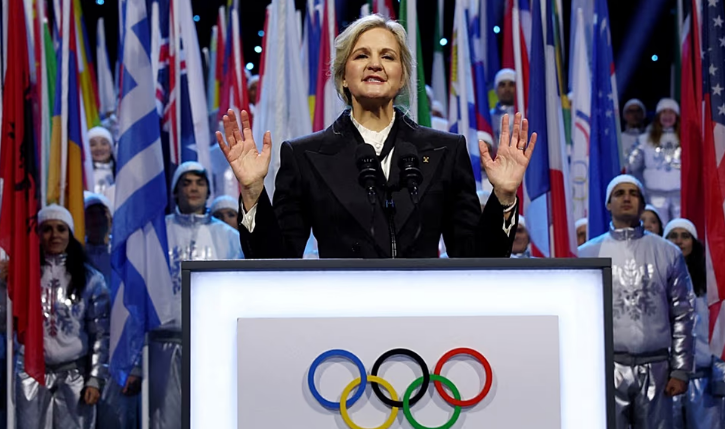
The 10-page policy also affects athletes with differences in sex development (DSD), such as two-time Olympic champion Caster Semenya. IOC President Kirsty Coventry acknowledged the sensitivity of the issue during a news conference. She emphasized the need for clarity, noting that “even the smallest margins can be the difference between victory and defeat” in elite competition.
The IOC cited research indicating that being born male provides significant physical advantages, including strength, power, and endurance, due to testosterone peaks in utero, infancy, and puberty. These advantages, the IOC stated, persist even after transitioning.
US President Donald Trump praised the decision on Truth Social, calling it a victory for women and girls. He credited a February executive order from his second presidency banning transgender athletes from competing in female sports categories in the United States. Trump also claimed he had instructed officials to deny visas to men attempting to compete in women’s sports in the US.
The policy could face legal challenges at the Court of Arbitration for Sport in Lausanne, Switzerland, potentially delaying its implementation. Past appeals have been brought by athletes such as India’s Dutee Chand and South Africa’s Caster Semenya, focusing on eligibility rules based on biological differences. Any future cases would examine the scientific evidence cited by the IOC, which has not been fully published.
The IOC announcement marks a significant shift in Olympic policy, aiming to address concerns about fairness while raising questions about inclusion, human rights, and the evolving role of science in sports regulation.
