


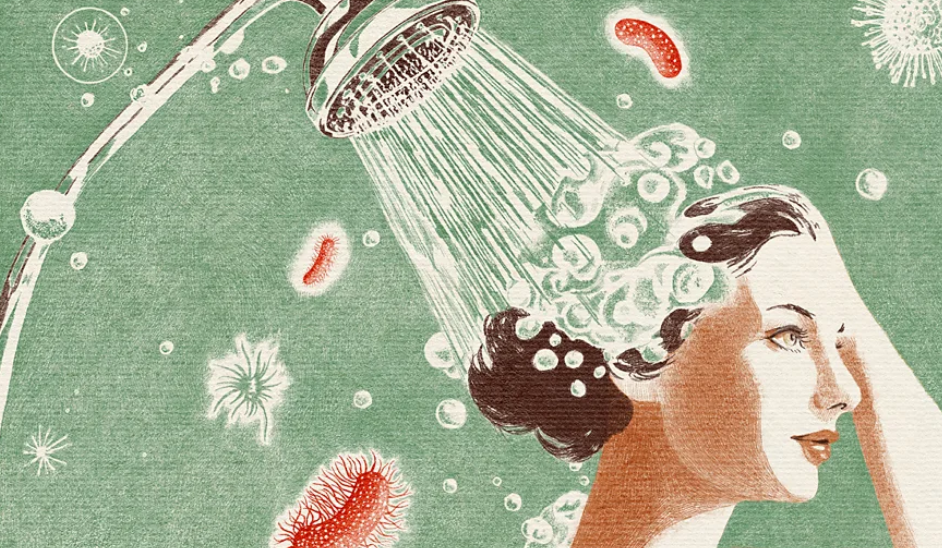
The daily shower — a ritual meant to wash away dirt and leave us feeling refreshed — may not be as clean as it seems. Scientists are warning that shower heads and the pipes leading into them can harbour vast colonies of bacteria and fungi, creating a hidden ecosystem that thrives in warm, damp conditions.
Inside the final stretch of a household’s plumbing, biofilms — slimy layers of microorganisms — build up overnight on the inner surfaces of shower hoses and heads. When the tap is turned on, these microscopic communities can be disturbed, sending tiny droplets containing bacteria into the air. While most microbes are harmless, the exact mix can vary depending on how often a shower is used and the materials it’s made from.
“After a shower, the hose remains warm, wet and still for hours,” researchers explain. “That makes it a perfect environment for bacteria to grow.” The microbes feed on nutrients dissolved in the water and trace amounts of carbon released by plastic pipes. Studies show that the number of bacterial cells in shower hoses can reach millions — even hundreds of millions — per square centimetre.
Most of these are harmless, but some, like Legionella pneumophila, which causes Legionnaires’ disease, or non-tuberculous mycobacteria (NTM), can pose health risks, especially to people with weakened immune systems. Fungal species such as Fusarium, Exophiala, and Malassezia — common on skin and in soil — have also been detected in household showers.
Dr. Frederik Hammes, a microbiologist at the Swiss Federal Institute of Aquatic Science and Technology, says the risk to most people is low. “Only showers contaminated with Legionella and other opportunistic pathogens pose a risk,” he said, noting that vulnerable individuals are more likely to be affected. Hospitals, for instance, frequently replace or disinfect shower heads to prevent infections.
Geography and water source also play a role. A U.S. study found higher rates of potentially harmful mycobacteria — and associated lung disease — in areas such as Hawaii, Florida, and the northeastern states. Chlorinated water systems tend to support more of these chlorine-resistant bacteria than well or non-chlorinated sources.
However, experts say there are easy ways to reduce microbial build-up. Choosing the right materials is key. Research shows hoses made from flexible PVC can contain up to 100 times more bacteria than those made from other plastics like PE-X. Stainless steel or chrome-plated metal shower heads also discourage biofilm growth, while shorter hoses and simple designs reduce water stagnation.
So while your morning shower likely remains safe, a little maintenance — from replacing old hoses to running the water regularly — can go a long way toward keeping both you and your bathroom truly clean.
