


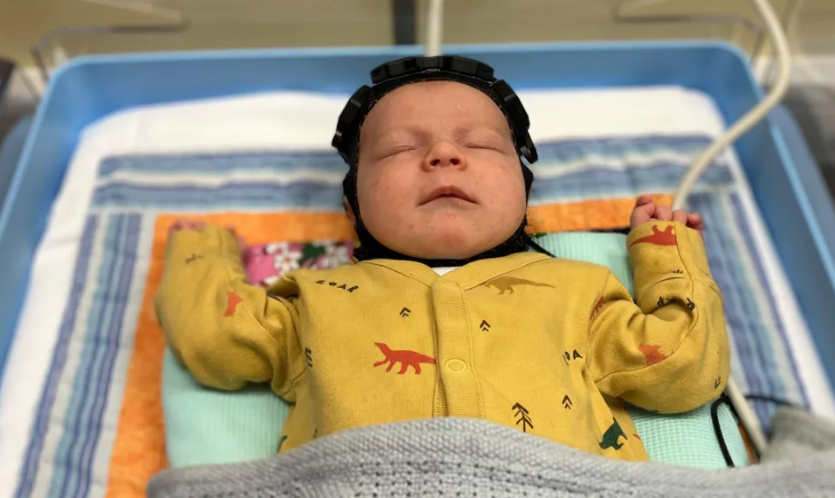
In a quiet ward at Cambridge’s Rosie Maternity Hospital, three-week-old Theo sleeps peacefully, unaware that he is part of a pioneering study that could transform how doctors diagnose and treat childhood brain disorders.
Dr Flora Faure, a researcher from the Fusion project — short for Functional UltraSound integrated with Optical Imaging in Neonates — gently places a small black cap on his head. The cap, dotted with tiny hexagonal sensors, combines light and ultrasound technology to monitor how the infant’s brain is working in real time.
Researchers say it is the first time the two techniques have been used together, offering a detailed picture of both the surface and deeper regions of the brain. The study could pave the way for faster, more accurate diagnosis of conditions such as cerebral palsy, epilepsy, and learning difficulties, with experts predicting it could be introduced into UK hospitals within the next decade.
“It’s the first time that light and ultrasound have been used together like this to give a more complete picture of the brain,” Dr Faure explained. “The light sensors track oxygen changes near the surface, while the ultrasound captures images of tiny blood vessels deep inside.”
Brain injury remains one of the leading causes of lifelong disability in newborns, affecting about five in every 1,000 babies. Such injuries can result from oxygen deprivation, infection, haemorrhage, or birth trauma, and often lead to movement and developmental disorders. Current tools like MRI and cranial ultrasound (CUS) have limitations, offering only partial insights and requiring babies to be transported to noisy scanners for lengthy procedures.
Consultant neurosurgeon Dr Alexis Joannides said the new portable device could be a “game-changer.” “MRI scans are expensive and difficult to repeat frequently,” he noted. “This system allows continuous monitoring at the cot side, giving doctors the ability to track changes daily in those critical early weeks.”
The research has been welcomed by Action Cerebral Palsy, which said early detection could dramatically improve outcomes. “Families often spend years waiting for a diagnosis,” said the charity’s founder, Amanda Richardson. “Technology like this could make all the difference, provided the NHS ensures therapists are available to meet the demand for early interventions.”
Professor Topun Austin, director of the Evelyn Perinatal Imaging Centre at Cambridge University Hospitals, said the Fusion study has already shown promising results in healthy and premature babies. The next phase will focus on infants at higher risk of brain injury. “Understanding brain activity patterns early helps us identify those most vulnerable,” he said.
Theo’s mother, Stani Georgieva, said taking part felt like contributing to something important. “His dad and I are both scientists, and we wanted him to be part of research that could help other children in the future,” she said.
Dr Joannides, who also co-directs the NIHR HealthTech Research Centre in Brain Injury, said if successful, the device could be rolled out across the NHS within three to five years. “We still have challenges to overcome,” he said, “but this technology could one day help identify at-risk babies before problems even begin.”
