


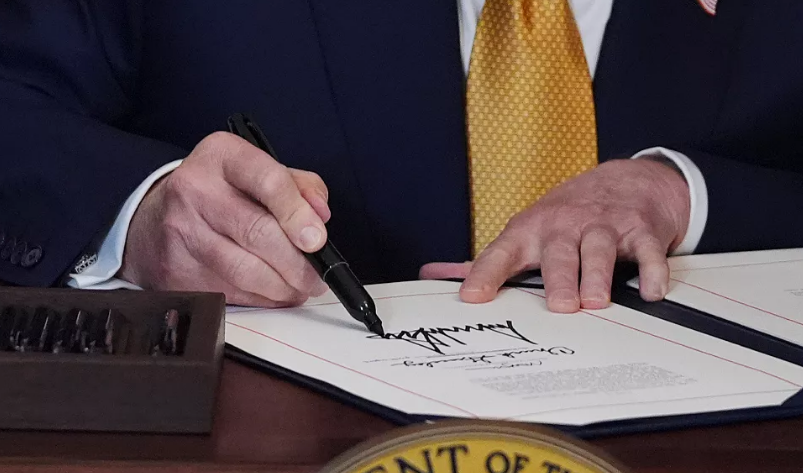
The U.S. House of Representatives on Friday narrowly approved a sweeping budget rollback proposed by President Donald Trump, voting 216-213 in favor of cutting approximately $9 billion (€7.7 billion) from government spending. The bill, now heading to the White House for Trump’s signature, marks a significant shift in federal priorities, targeting funding for public media and international aid.
The rescission package includes a $1.1 billion cut to the Corporation for Public Broadcasting (CPB), which was set to receive the funding over the next two fiscal years. The CPB supports over 1,500 local public radio and television stations across the U.S., and also provides funding to National Public Radio (NPR) and the Public Broadcasting Service (PBS) for national programming. The administration has long criticized public broadcasting for what it claims is a political bias against conservatives.
In addition to domestic cuts, the bill slashes nearly $8 billion from foreign aid programs, including humanitarian assistance in regions suffering from conflict, natural disasters, and disease. Key reductions include $800 million from refugee support services—such as emergency shelter and family reunification—and $496 million for food, water, and healthcare in disaster-affected areas. A further $4.15 billion is being withdrawn from programs that promote economic development and democracy in developing countries.
The vote came after a brief delay, as Democrats pushed for a motion to release files related to convicted sex offender Jeffrey Epstein, though the motion failed to gain traction.
While some moderate Republicans expressed concerns over the impact of the cuts—particularly those representing rural areas dependent on public broadcasting—they ultimately fell in line, wary of clashing with Trump’s efforts to drastically reduce federal spending. “This is about eliminating waste and making America fiscally responsible again,” one GOP lawmaker said.
However, critics argue the cuts are both short-sighted and damaging. Democratic lawmakers warned that slashing foreign aid would weaken U.S. global leadership and open the door for geopolitical rivals like China to expand their influence. “This move sends the message that America is stepping back from the world stage,” one Democrat said during floor debate.
Republicans countered that the cuts would force other nations to shoulder more responsibility in responding to international crises, framing it as a push for greater global burden-sharing.
The approval of the rescission marks the first time in decades a U.S. president has successfully pushed through such a package. Trump has signaled that more funding reductions could follow, as part of his broader agenda to reshape federal spending.
