


A federal appeals court has allowed construction work on President Donald Trump’s planned White House ballroom to continue, lifting a temporary halt and marking a legal win for the administration as a dispute over the project’s approval process moves forward.
The US Court of Appeals for the District of Columbia Circuit issued an administrative stay after the Trump administration appealed a ruling by US District Judge Richard Leon that had blocked above-ground construction. The decision means both underground and surface work can proceed at least until a scheduled hearing on 5 June.
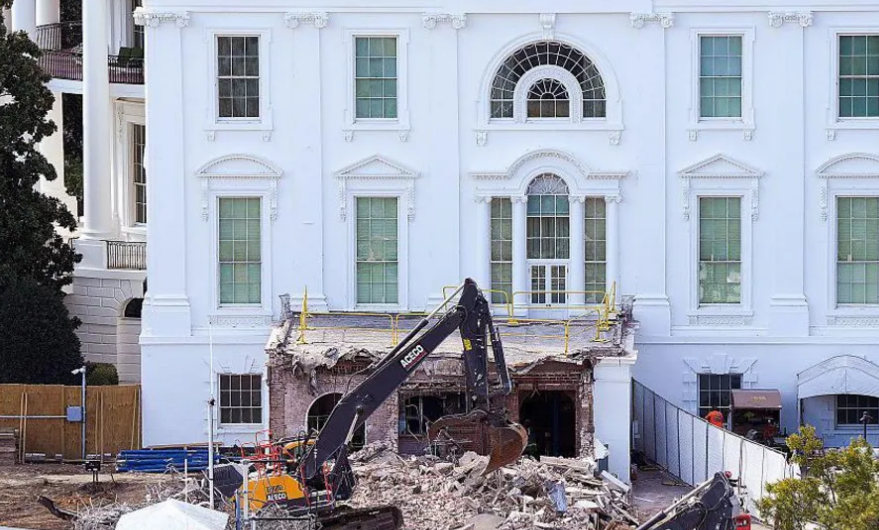
The case centres on a major redevelopment of the White House grounds, where the East Wing, built in 1902, was demolished in October to make space for a large new ballroom. The proposed venue is expected to accommodate up to 1,350 guests and is part of a wider redevelopment plan estimated to cost $400 million, according to the White House, which says the project is funded entirely through private donations.
Judge Leon had previously ordered a halt to construction, stating that the project likely required congressional approval. He also questioned the administration’s argument that the development was essential for national security, suggesting it could not be used to bypass legal requirements.
“National security is not a blank cheque,” Leon wrote in his decision, arguing that the classification of the ballroom as a security asset did not override procedural obligations.
Following the ruling, the Justice Department filed an appeal, warning that halting construction could pose risks to national security and leave a significant unfinished structure adjacent to the Executive Residence.
The White House defended the project, with President Trump describing it as a necessary upgrade to support high-level meetings and secure gatherings. In comments posted on Truth Social, he argued that the ballroom and its associated underground facilities would include protective infrastructure such as bomb shelters and medical rooms, and insisted the project was essential for both diplomatic and security purposes.
National Trust for Historic Preservation v. White House Ballroom Project was originally brought by preservation groups, which allege that construction began without required review by the National Capital Planning Commission and without congressional approval.
The appeals court ruling follows an earlier directive asking Judge Leon to reconsider whether pausing construction could have national security implications. That reassessment is now expected to be central to the upcoming hearing.
While the legal battle continues, construction crews are expected to resume work on the expansive redevelopment, which remains one of the most closely watched White House infrastructure projects in recent years.
