


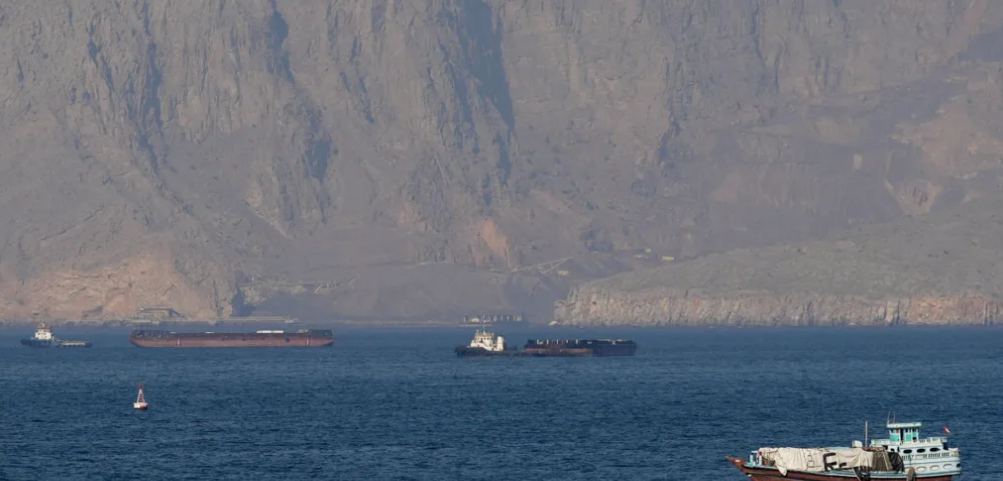
Strait of Hormuz has been closed again to commercial shipping by Iran, with Iranian forces warning that any vessel approaching the area could be targeted, further intensifying tensions in one of the world’s most critical energy routes.
The announcement came on Saturday following reports that several ships, including a tanker, were targeted in waters near the strait. Iran’s Islamic Revolutionary Guard Corps (IRGC) said the decision was taken in response to what it described as a continuing naval blockade imposed by the United States on Iranian ports.
The IRGC issued a warning that no vessel should move within the Persian Gulf or the Sea of Oman without permission, adding that ships attempting to enter or transit the strait would be treated as hostile. It said a limited number of vessels had passed under its oversight briefly, but access would now be suspended until US restrictions were lifted.
The move follows a brief reopening of the waterway announced a day earlier by Iran’s foreign ministry, which had raised hopes of easing tensions. However, Iranian officials reversed course after Washington signalled that its blockade of Iranian ports would remain in place until a broader agreement was reached.
Donald Trump dismissed Iranian warnings, stating that Tehran would not be allowed to “blackmail” the United States through threats to global shipping. He said the US naval presence would continue until a peace deal was finalised.
The IRGC-linked Supreme National Security Council accused Washington of violating ceasefire terms and confirmed that the reopening of the strait had been halted. Officials also said they were reviewing new proposals from the US, though no formal response had been issued.
Maritime security agencies reported multiple incidents on Saturday. The UK Maritime Trade Operations said Iranian gunboats opened fire on a tanker in the strait, while another vessel was reportedly struck by an unknown projectile near Oman’s northeastern coast. Separate reports indicated that merchant ships were also targeted by gunfire while attempting to pass through the waterway.
India’s foreign ministry said it had summoned Iran’s ambassador after two Indian-flagged vessels were caught in the incident, expressing serious concern over the safety of commercial shipping.
Despite the restrictions, tracking data showed some vessels briefly transited the strait during a short opening period, while others altered course after being denied passage. Roughly one-fifth of global oil and liquefied natural gas normally moves through the chokepoint, and disruptions have already pushed energy prices sharply higher.
The latest closure adds further uncertainty to an already fragile situation, with global shipping operators now reassessing risks in one of the world’s most heavily trafficked and strategically sensitive waterways.
