


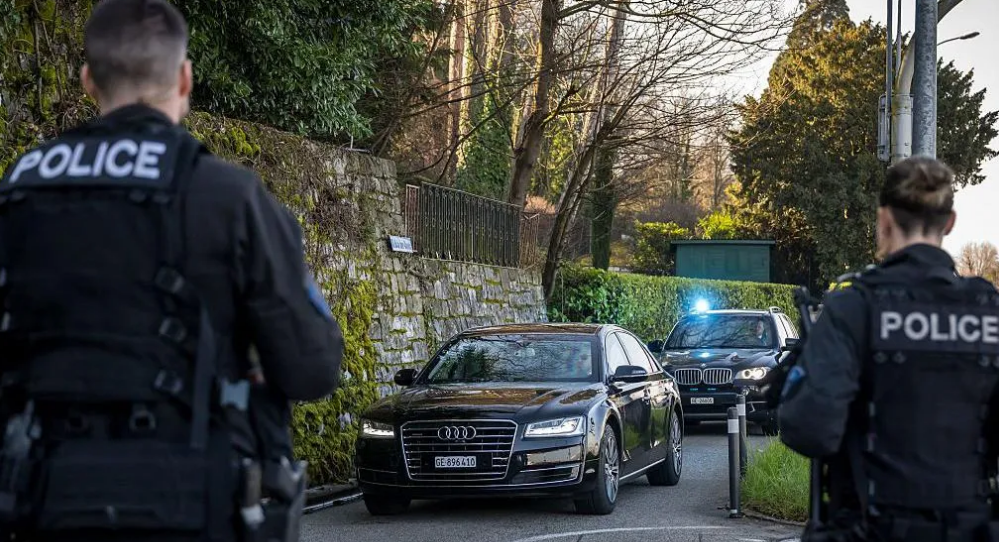
US and Iranian officials are holding a third round of indirect talks in Geneva, aimed at preventing a military escalation over Tehran’s nuclear programme. The discussions come as President Donald Trump has threatened strikes on Iran if a deal is not reached, while Iran has vowed to respond to any attack with force.
The talks are mediated by Oman and involve Iran’s Foreign Minister Abbas Araghchi, with the US represented by Special Envoy Steve Witkoff and Trump’s son-in-law, Jared Kushner. Both sides have not publicly disclosed detailed proposals, but Iran is reportedly willing to offer some concessions regarding its nuclear programme, while seeking relief from crippling US sanctions.
The meeting occurs amid the largest US military build-up in the Middle East since 2003, including two aircraft carriers, warships, fighter jets, and refuelling aircraft. Trump has indicated a preference for diplomacy but has repeatedly suggested a limited strike could be used to pressure Iran. Security officials have warned that military action carries the risk of escalating into a wider regional conflict.
Trump’s concerns center on Iran’s enrichment of uranium, which the US and Israel have long feared could support a nuclear weapons programme. Iran insists its nuclear activities are for peaceful purposes, and its foreign minister reiterated that the country “under no circumstances ever [will] develop a nuclear weapon.” Tehran has also stopped allowing International Atomic Energy Agency inspectors to access sites damaged in last year’s US-led strikes.
In his State of the Union address, Trump warned that Iran was developing missiles capable of reaching the US and accused Tehran of attempting to restart its nuclear weapons programme. He stated that a nuclear-armed Iran could not be tolerated, though he did not outline specific demands for the negotiations.
Previous rounds of talks have raised the possibility of creating a regional consortium for uranium enrichment and addressing Iran’s stockpile of highly enriched uranium, while Iran seeks relief from sanctions that have battered its economy. Tehran has refused to discuss limits on its ballistic missile programme or its support for regional allies, including Hamas, Hezbollah, militias in Iraq, and the Houthis in Yemen.
Reports in US media suggest Trump has considered targeted strikes against Iran’s Revolutionary Guards or nuclear sites to increase pressure. If diplomacy fails, some officials indicate the administration could consider broader action aimed at regime change, though military leaders have cautioned about the high risks of such operations.
The situation has drawn concern from US-allied countries in the region, who warn that airstrikes alone are unlikely to achieve regime change and could trigger a broader conflict. Israeli Prime Minister Benjamin Netanyahu has emphasized that any deal must address Iran’s missile capabilities and regional proxies, reflecting Israel’s long-standing security concerns.
With tensions running high, lawmakers in Washington have been briefed on the situation, highlighting the gravity of the negotiations. Senate Minority Leader Chuck Schumer stated that the administration must make its case clearly to the American public as talks continue.
The Geneva meetings are seen as critical for averting conflict, but the path to a durable agreement remains uncertain, with both sides maintaining firm positions while navigating a high-stakes geopolitical landscape.
