


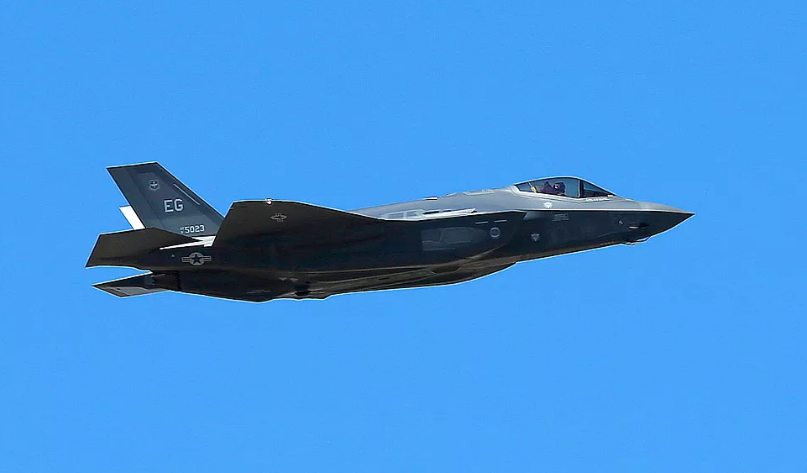
Britain has announced the purchase of 12 American-made F-35A fighter jets capable of carrying nuclear weapons, marking the most significant upgrade to the UK’s nuclear deterrent in a generation. The move signals a renewed role for the Royal Air Force (RAF) in the country’s nuclear strategy for the first time since the 1990s.
The announcement was timed to coincide with the NATO summit in the Netherlands and comes amid growing concerns over global nuclear threats and European security. Until now, the UK’s nuclear deterrent has been exclusively reliant on its fleet of four nuclear-armed submarines based at Faslane in Scotland.
Prime Minister Keir Starmer said the decision to expand the country’s nuclear delivery capability reflects a shift in global security dynamics. “In an era of radical uncertainty, we can no longer take peace for granted,” he said. “My government is investing in our national security, and this purchase reflects the UK’s unwavering commitment to NATO and the Euro-Atlantic alliance.”
NATO Secretary General Mark Rutte welcomed the decision, describing it as “yet another robust British contribution to NATO.”
The acquisition of the F-35A jets will allow the UK to join a small group of NATO members, including Germany and Belgium, that possess dual-capable aircraft (DCA)—aircraft certified to carry and deliver US-provided nuclear weapons. It is not yet clear when the new aircraft will be delivered or operational.
The jets will be stationed at RAF Marham in Norfolk, where the UK’s existing fleet of F-35B aircraft is also based. While the F-35B variant is suited for short take-off and vertical landing, the F-35A has been specifically chosen for its compatibility with NATO’s nuclear-sharing arrangements.
The purchase comes as European nations face increasing pressure to ramp up defence spending. In anticipation of a potential shift in US military commitments under a possible second Trump administration, NATO allies are expected to agree on a new target of spending 5% of GDP on defence by 2035.
While the UK has welcomed the target, other nations have expressed hesitation. Spain called the proposed goal “unreasonable,” and Belgium indicated it may struggle to meet the benchmark.
Still, Britain’s decision underscores a broader European push to reinforce defence capabilities in light of rising tensions with Russia and an uncertain future for transatlantic military cooperation.
