


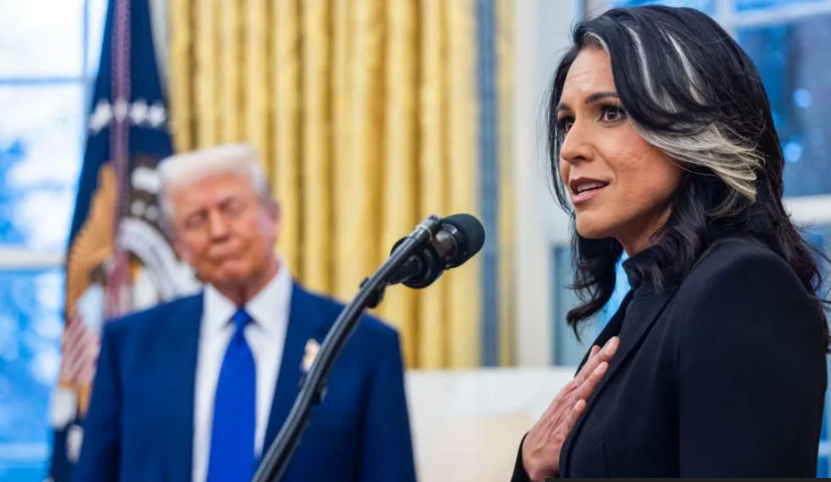
Former U.S. Congresswoman Tulsi Gabbard has warned that Iran could be capable of producing a nuclear weapon within weeks, marking a significant shift from her testimony before Congress earlier this year, when she stated the country was not building nuclear arms.
Gabbard, a key figure in the “America First” political movement, posted on social media that updated intelligence assessments now suggest Iran is “at the point that it can produce a nuclear weapon within weeks to months.” She added, “President Trump has been clear that can’t happen, and I agree.”
Her comments came just days after former President Donald Trump publicly dismissed her March testimony and said Iran had accumulated a “tremendous amount of material” and could possess a nuclear weapon “within months.”
Gabbard responded by releasing a full video of her earlier testimony, in which she stated U.S. intelligence agencies had found no evidence Iran had resumed its suspended 2003 nuclear weapons programme, despite its rapidly growing stockpile of enriched uranium.
She acknowledged in her original testimony that Iran’s uranium stockpile was “unprecedented for a state without nuclear weapons” but insisted at the time that Iran was not actively building such weapons.
The Director of National Intelligence has since defended Gabbard’s testimony, claiming the remarks were taken out of context by “dishonest media.”
Her new warning comes amid rising regional tensions following Israel’s air strikes on Iranian nuclear and military sites that began on June 13. Israeli Prime Minister Benjamin Netanyahu claimed the attacks targeted “the heart” of Iran’s nuclear programme.
The Israeli strikes, which have destroyed military facilities and killed senior Iranian commanders and scientists, have prompted a wave of retaliatory drone and missile attacks by Iran. According to Tehran’s health ministry, at least 430 Iranians have been killed, while human rights groups place the unofficial toll at 657. In Israel, 25 people have died, including one woman who suffered a heart attack during an Iranian strike.
On Saturday, Iranian Foreign Minister Abbas Araghchi reiterated that Iran was open to diplomatic negotiations but ruled out talks with the U.S. “under bombardment.”
“Our position is clear — we are absolutely ready for a negotiated solution, but not while our people are under attack,” he said.
Trump, meanwhile, warned that Iran has “a maximum of two weeks” to reach a deal with Washington, hinting at potential U.S. military involvement in the conflict. “I’m giving them a period of time, and I would say two weeks would be the maximum,” he told reporters.
The nuclear standoff comes nearly a decade after the 2015 Iran nuclear deal, which aimed to curb Iran’s nuclear capabilities in exchange for sanctions relief. That agreement unravelled after Trump withdrew the U.S. from the deal in 2018.
As calls for renewed diplomacy grow louder in Europe, the path forward remains uncertain, with both Washington and Tehran digging in amid an intensifying cycle of military escalation.
