


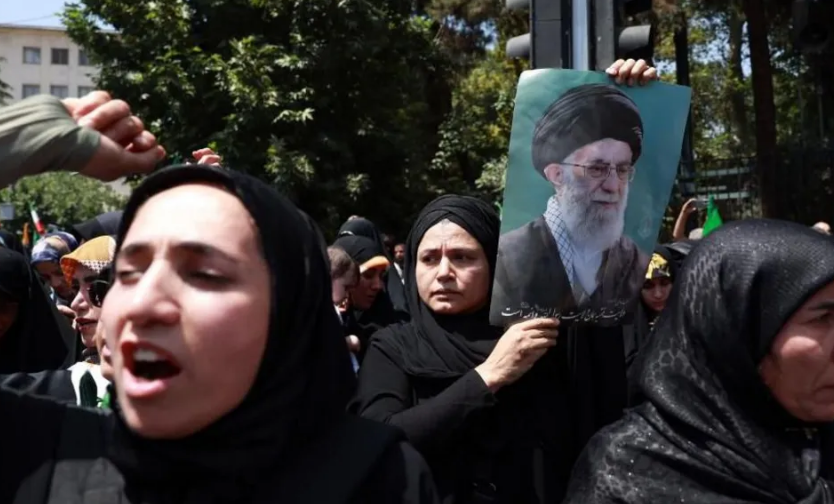
Iran has ruled out resuming negotiations over its nuclear programme while under Israeli attack, escalating tensions as both sides continue to exchange missile strikes in a conflict showing no signs of easing.
Foreign Minister Abbas Araghchi made the announcement on Friday following a meeting with European diplomats in Geneva, where officials from the UK, France, Germany and the EU had urged Iran to return to diplomacy with the United States.
“Iran will not enter any talks while facing aggression,” Araghchi said, accusing Israel of violating international law. “Our nuclear programme is peaceful, and our right to self-defence is non-negotiable.”
His remarks came just hours after Israeli army chief Lt. Gen. Eyal Zamir warned in a video statement that Israel must prepare for a “prolonged campaign” against Iran. The Israeli military confirmed fresh strikes on Iranian ballistic missile storage and launch facilities, describing them as direct responses to ongoing missile attacks from Iran.
Late Friday, explosions were reported in and around Tel Aviv, with missile interceptions lighting up the night sky. Debris reportedly ignited a fire in a residential building. Meanwhile, in Iran, state media said a 16-year-old was killed and two others injured in an Israeli strike on the city of Qom. The nuclear facility in Isfahan was also said to have come under renewed Israeli attack.
Despite calls for calm from European leaders, Israel signalled its operations would continue. Foreign Minister Gideon Sa’ar told German newspaper Bild that Israel had set back Iran’s nuclear capabilities by at least two years and would not stop until Iranian nuclear infrastructure was dismantled.
Israel’s ambassador to the United Nations accused Iran of pursuing a “genocidal agenda,” while US President Donald Trump added pressure, giving Tehran “a maximum of two weeks” to avoid potential American military action.
“I’m giving them a period of time, and I would say two weeks would be the maximum,” Trump told reporters, dismissing the value of European diplomacy and asserting that Iran only wanted to deal directly with the United States.
UK Foreign Secretary David Lammy acknowledged the crisis was “perilous and deadly serious,” and warned that the window for de-escalation was short. French Foreign Minister Jean-Noel Barrot echoed the sentiment, insisting a “definitive solution” to the nuclear dispute cannot be achieved by military means.
Meanwhile, missile salvos continued. Israeli authorities said 20 Iranian missiles targeted Haifa on Friday. One Israeli woman reportedly died of a heart attack during the attack, bringing Israel’s death toll to 25 since hostilities began.
Iranian officials reported widespread casualties from Israeli air strikes. The Iranian health ministry stated that 224 people had been killed so far, while independent sources like the Human Rights Activists News Agency put the figure significantly higher at 657.
The conflict began with Israeli strikes inside Iran on June 13, triggering a fierce round of retaliatory attacks involving missiles and drones. As both nations brace for further escalation, prospects for peace or even dialogue remain distant.
