


US President Donald Trump said the latest American military strikes against Iran inflicted significant damage, describing the attacks as a tribute to three US service members killed in recent days as fighting between Washington and Tehran continued to intensify.
Speaking after a new wave of military operations, Trump said the strikes hit Iran “very hard” and were carried out “in honour” of the three American troops. Two soldiers were killed in an attack on a military base in Jordan, while another US service member died following an Iranian attack in northern Iraq. US officials also said remains believed to belong to a missing soldier from the Jordan attack had been recovered, although formal identification is still underway.
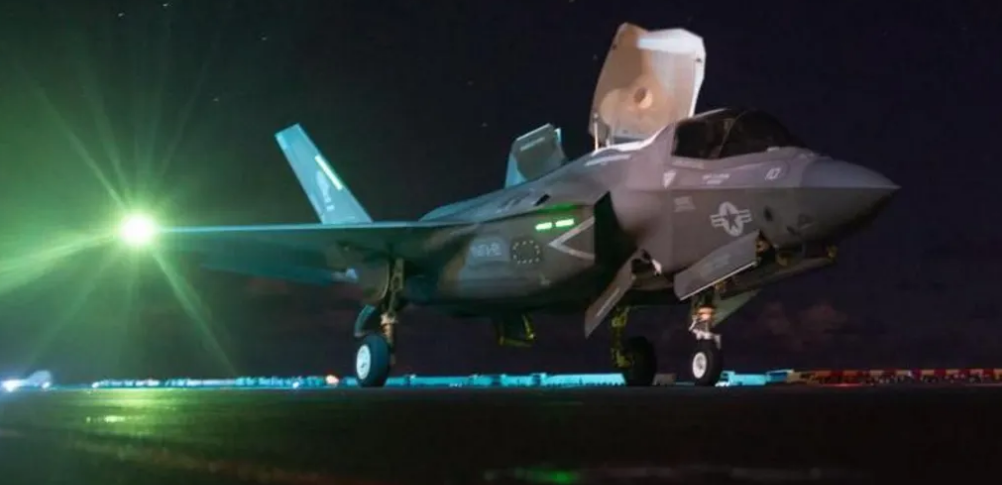
In the early hours of Monday local time, US Central Command (Centcom) announced that it had launched another round of strikes, marking the ninth consecutive night of military operations against Iranian targets. The US military said the attacks focused on military facilities and communications infrastructure intended to reduce Iran’s ability to carry out attacks against commercial shipping in the Strait of Hormuz.
Centcom said the operation was part of efforts to weaken Iranian military capabilities after recent attacks targeting US personnel and international maritime traffic.
Iran confirmed that multiple locations across the country had come under attack. The semi-official Tasnim news agency reported explosions in several cities, including Tabriz, Chabahar, Konarak, Bandar Mahshahr and Bandar Imam Khomeini. Iranian authorities have not released information on casualties or the extent of the damage.
Tehran also announced retaliatory military action. Iranian officials said they carried out what they described as a “surprise attack” against US assets in Syria and targeted American aircraft at Jordan’s Aqaba airport. In neighbouring Kuwait, the country’s armed forces reported intercepting Iranian drones before they reached their targets.
The conflict has also increased concerns over global energy supplies. Iranian state media reported that two oil tankers exploded while attempting to cross the Strait of Hormuz. The Islamic Revolutionary Guard Corps (IRGC) claimed the vessels were using what it described as an unsafe southern route through the strategic waterway and warned that oil and gas shipments would remain at risk while US military operations continued. Centcom rejected the Iranian account of the incident.
The Strait of Hormuz is one of the world’s busiest oil shipping routes, carrying a significant share of global crude exports. Continued military activity in the area has raised fears of wider disruption to international energy markets.
Despite the growing conflict, US Secretary of State Marco Rubio said Washington remained willing to pursue diplomacy. He stated that the United States continued to support a negotiated solution but argued that the international community must decide whether Iran should be allowed to control access to such a vital global shipping route.
The latest escalation follows the collapse of a preliminary ceasefire reached in June. Efforts to negotiate a lasting agreement have stalled since Trump declared the arrangement “over” earlier this month, leaving the region facing renewed uncertainty as military exchanges continue.
